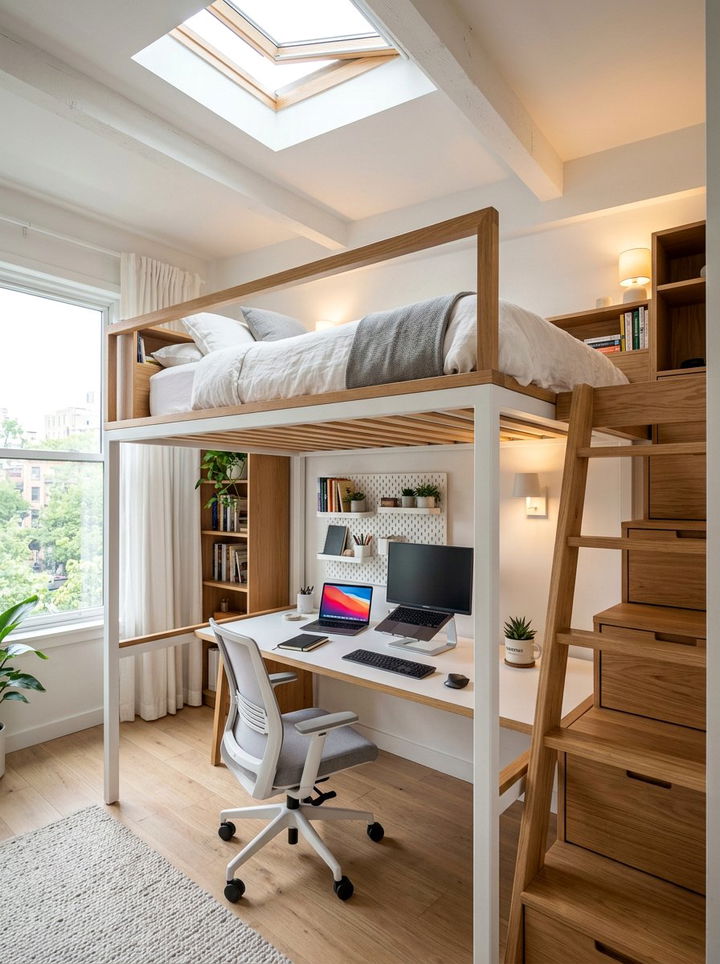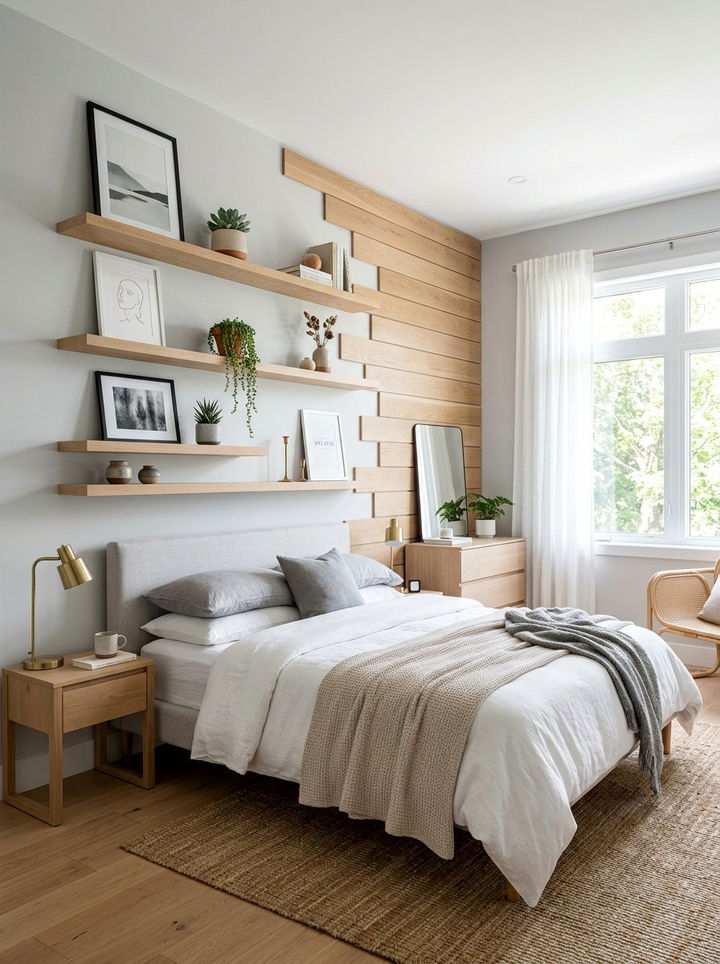
Creating a multi-functional sanctuary starts with understanding how to organize your space effectively through smart zoning techniques. Many homeowners struggle with large, open bedrooms that feel cold or small rooms that feel cluttered by various activities like working and sleeping. By strategically defining different areas for rest, productivity, and relaxation, you can transform a standard room into a high-end suite. Zoning isn ‘t just about adding walls; it’ s about using visual cues like rugs, lighting, and furniture placement to guide the eye. Whether you live in a tiny studio or a sprawling master suite, these layouts help maintain order and enhance the overall aesthetic of your home.
1. Glass Partition Bedroom Office
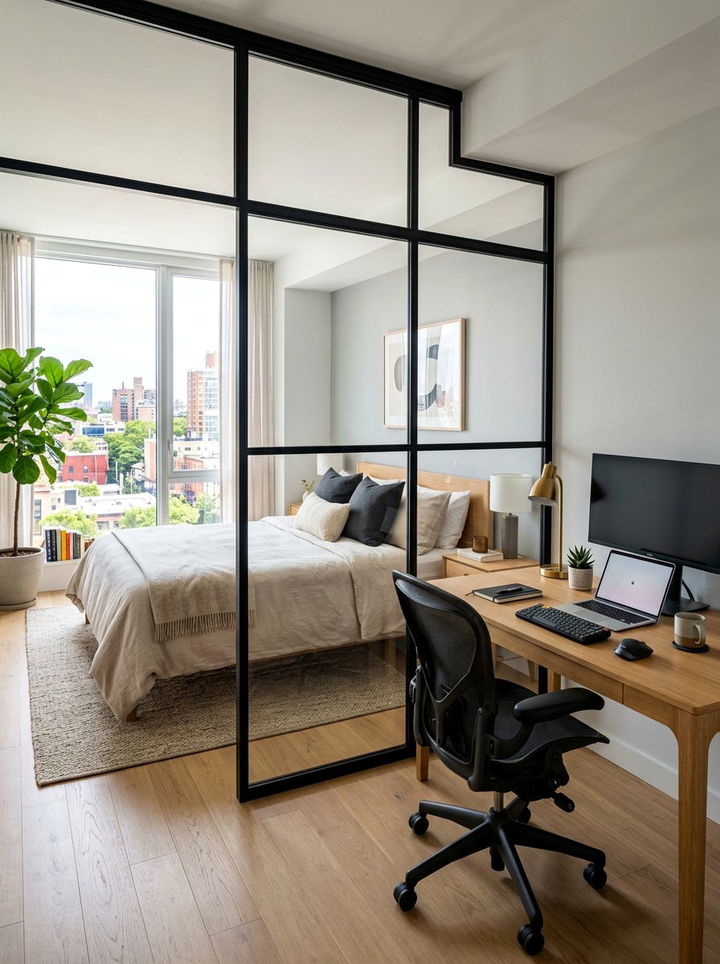
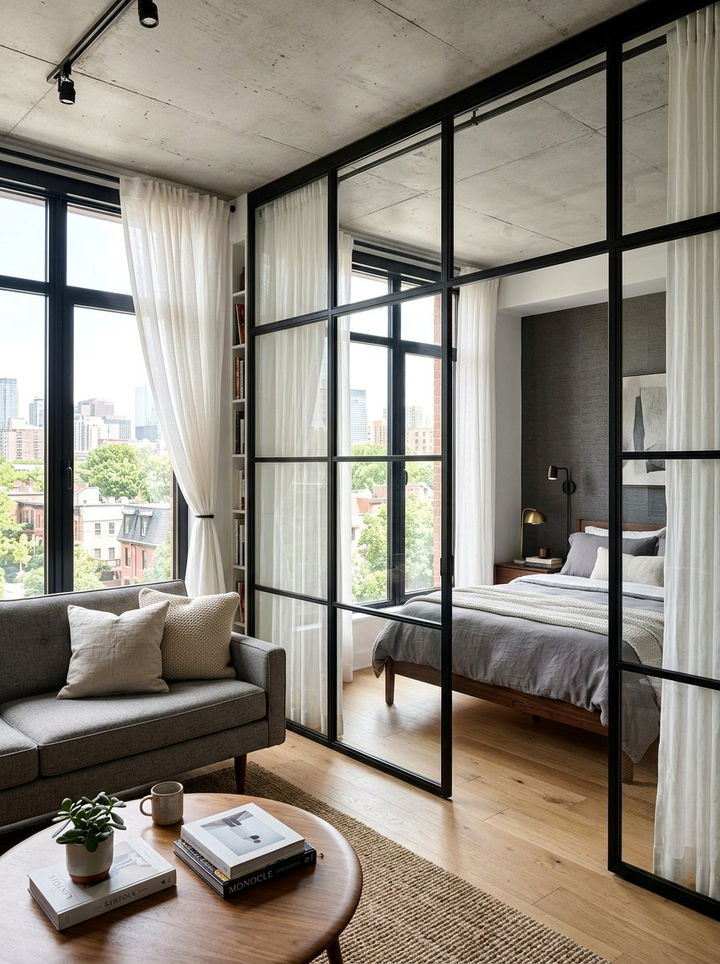
Installing a glass partition is one of the most effective ways to create a dedicated workspace within your sleeping quarters without sacrificing natural light. This modern approach uses thin metal frames and large panes of glass to physically separate the desk area from the bed while keeping the room feeling open. It provides a necessary mental boundary, helping you leave work behind when it is time to sleep. You can choose frosted glass for extra privacy or clear glass to maintain a sense of architectural grandeur. This design choice works exceptionally well in industrial or contemporary homes where sleek lines and transparency are highly valued.
2. Open Shelving Room Divider
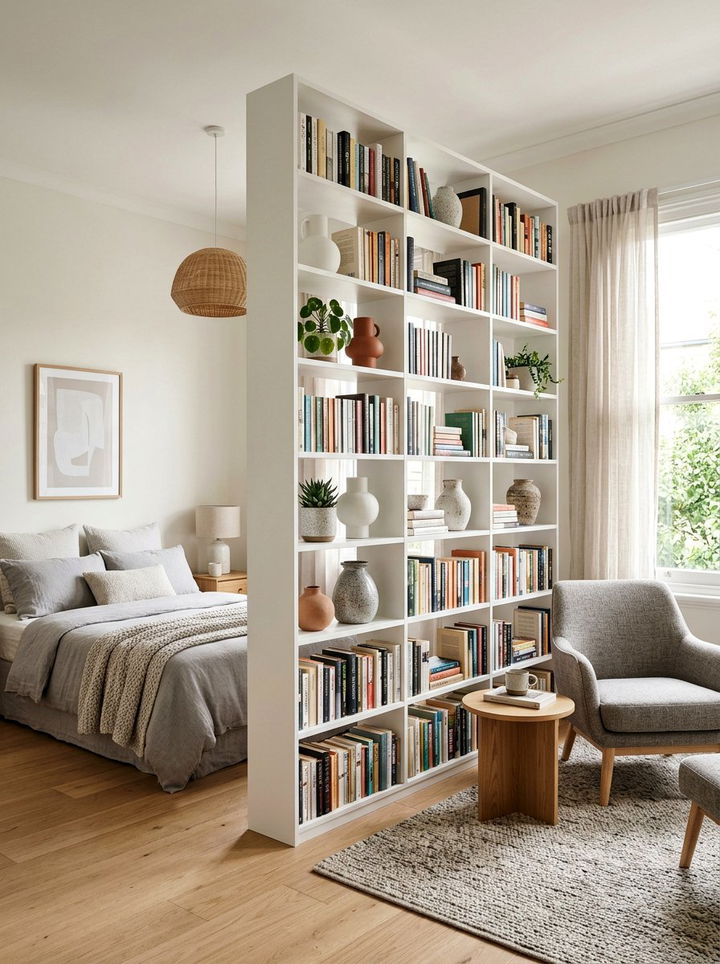
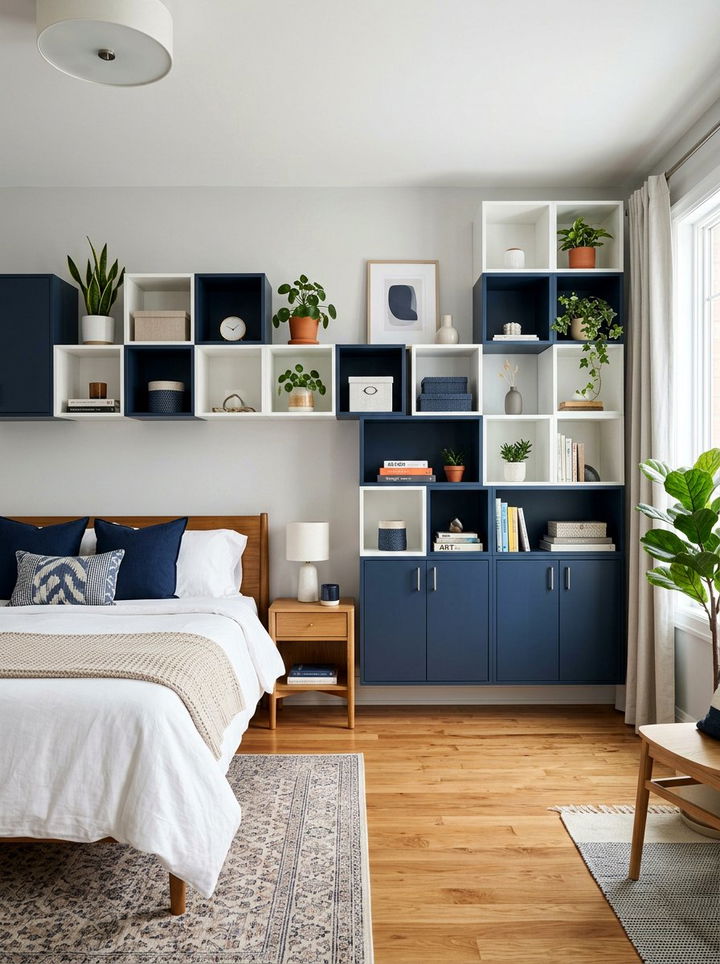
Using an open shelving unit as a room divider offers both storage and a subtle visual break in a large bedroom. Unlike a solid wall, an open bookcase allows light to pass through and provides a place to display curated decor, books, and indoor plants. You can position the shelf perpendicular to a wall to create a distinct dressing area or a small reading nook. This method is incredibly flexible because you can easily move the furniture if you decide to change the layout later. It is a practical solution for renters who want to define zones without making permanent structural changes.
3. Bedroom Reading Nook Rug

A large area rug is a powerful tool for defining a specific zone without using any vertical barriers at all. By placing a plush rug in a corner and adding a comfortable armchair and a floor lamp, you instantly create a cozy reading nook. The rug acts as a visual anchor that tells the eye this specific area has a different purpose from the rest of the room. Choose a texture or color that contrasts slightly with the main flooring to make the zone stand out. This simple addition makes the bedroom feel more like a multi-room suite rather than just a place to sleep.
4. Floor To Ceiling Bedroom Curtains
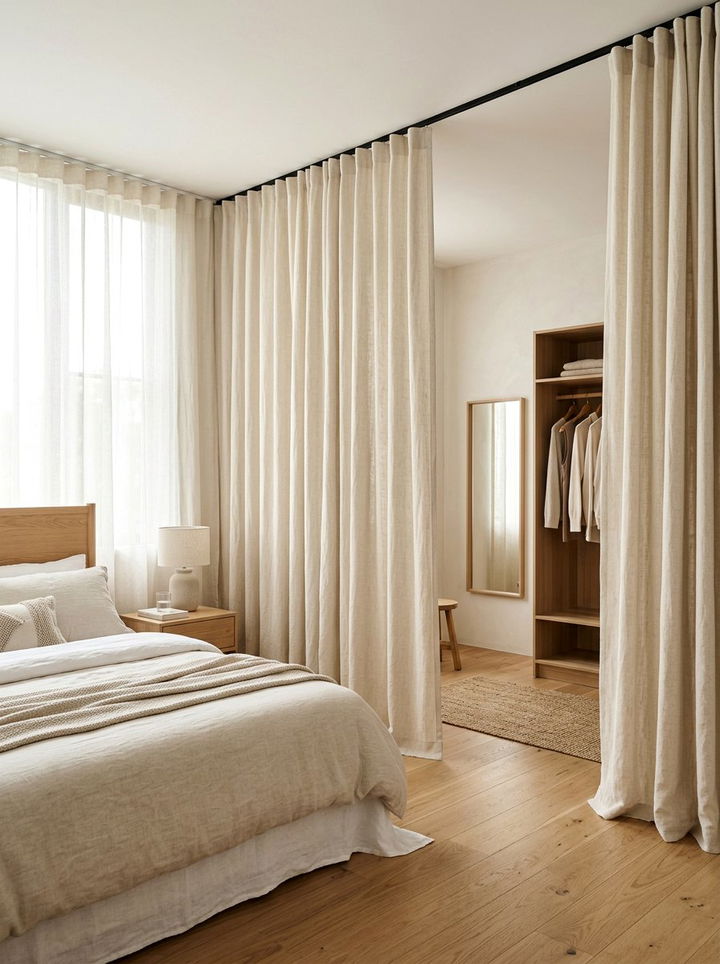
Softening a room while creating privacy is easily achieved by hanging floor-to-ceiling curtains across a portion of the bedroom. This zoning technique is perfect for hiding a messy wardrobe or creating a romantic canopy around the bed area. When the curtains are closed, they provide a complete visual block, making the separate zones feel like entirely different rooms. You can use heavy velvet for a dramatic, sound-dampening effect or light linen for a breezy, coastal vibe. It is an affordable and stylish way to manage a flexible floor plan while adding a layer of sophisticated texture to your interior design.
5. Sliding Barn Door Bedroom Closet
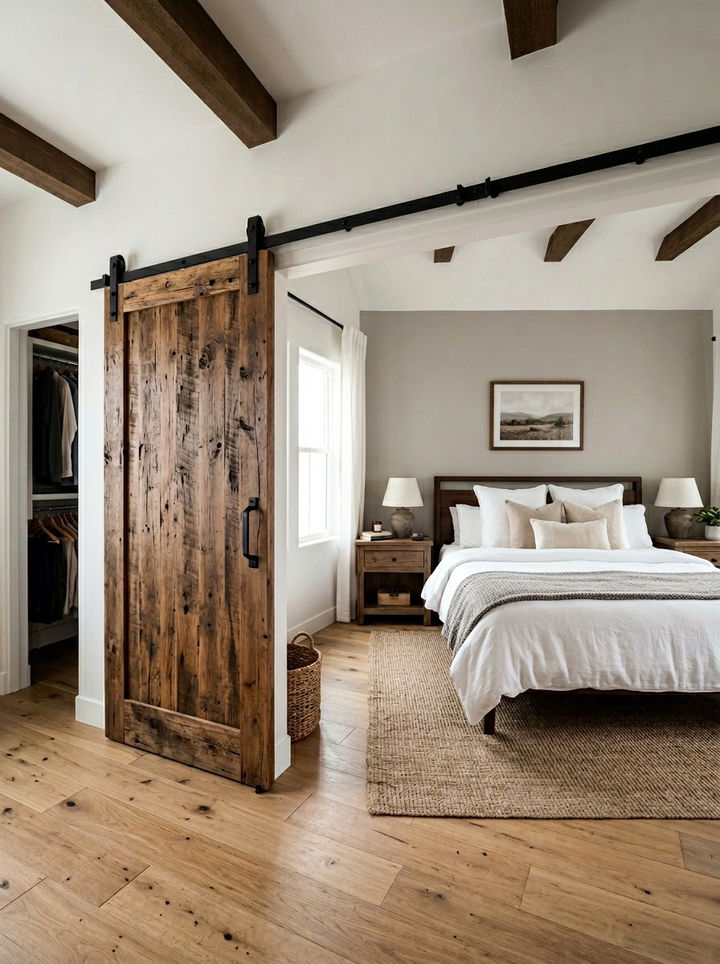
Sliding barn doors are an excellent architectural feature for zoning off a walk-in closet or an en-suite bathroom. These doors take up very little space since they slide along a track rather than swinging open into the room. They provide a clear physical separation between the sleeping zone and the utility zones of the bedroom. The wood or metal finish of the door can also serve as a major decorative element, adding character and warmth to the space. By closing the door, you can instantly hide any clutter, ensuring that the main sleeping area remains a peaceful and organized environment.
6. Raised Platform Bed Zone
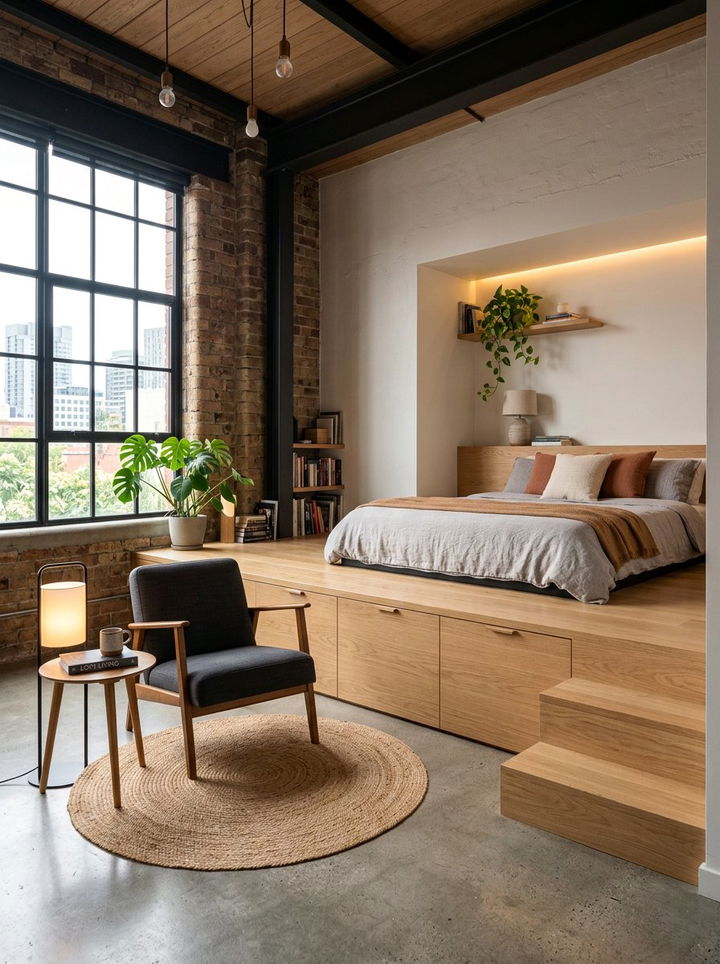
Building a raised platform for your bed is a sophisticated way to use vertical space to define different zones. This architectural move lifts the sleeping area above the rest of the floor, creating a clear psychological distinction between rest and other activities. The lower level can then be used for a lounge, a desk, or even a creative hobby space. Often, these platforms include built-in drawers underneath, providing extra storage that keeps the room tidy. It is a popular choice for studio apartments or small bedrooms where every square inch of the floor must be used with maximum efficiency.
7. Bedroom Sofa At Foot Of Bed
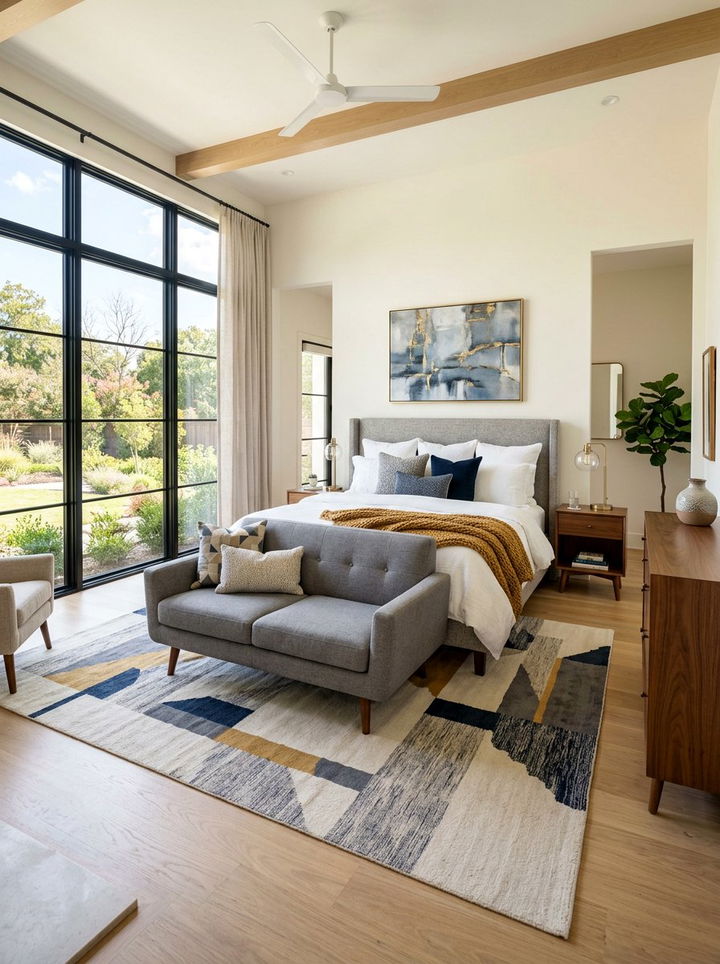
Placing a small sofa or a stylish loveseat at the foot of your bed is a classic way to create a lounge zone. This arrangement bridges the gap between the bed and the rest of the room, providing a spot to sit and put on shoes or relax without messy blankets. It makes the bedroom feel more like a high-end hotel suite by adding a secondary seating area. You can pair the sofa with a small coffee table or an ottoman to complete the look. This layout works best in longer rooms where there is plenty of space to walk around the furniture.
8. Double Sided Fireplace Bedroom
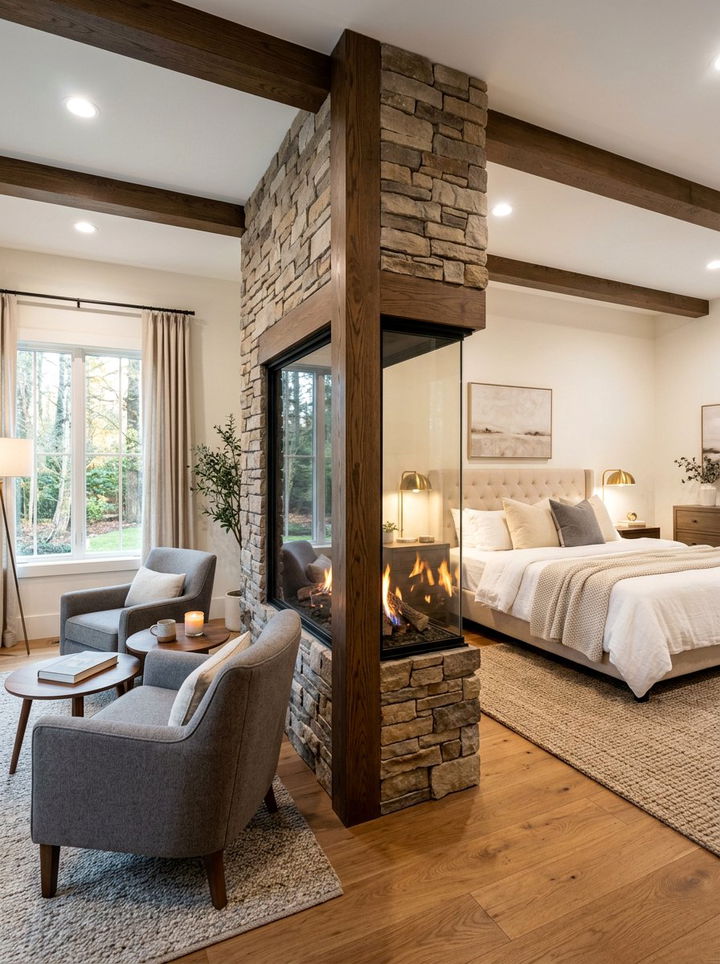
A double-sided fireplace is a luxury zoning element that provides warmth and ambiance to two different areas at once. You can use it to separate the sleeping area from a private sitting room or a bathroom. The flickering flames create a stunning focal point while the structure of the fireplace acts as a partial wall. This allows for an open-concept feel while still providing a clear physical break between functional zones. It is a high-impact design choice that adds significant value to a home. The flickering light and warmth naturally draw people toward the cozy lounge side of the partitioned room.
9. Bedroom Vanity Behind Headboard
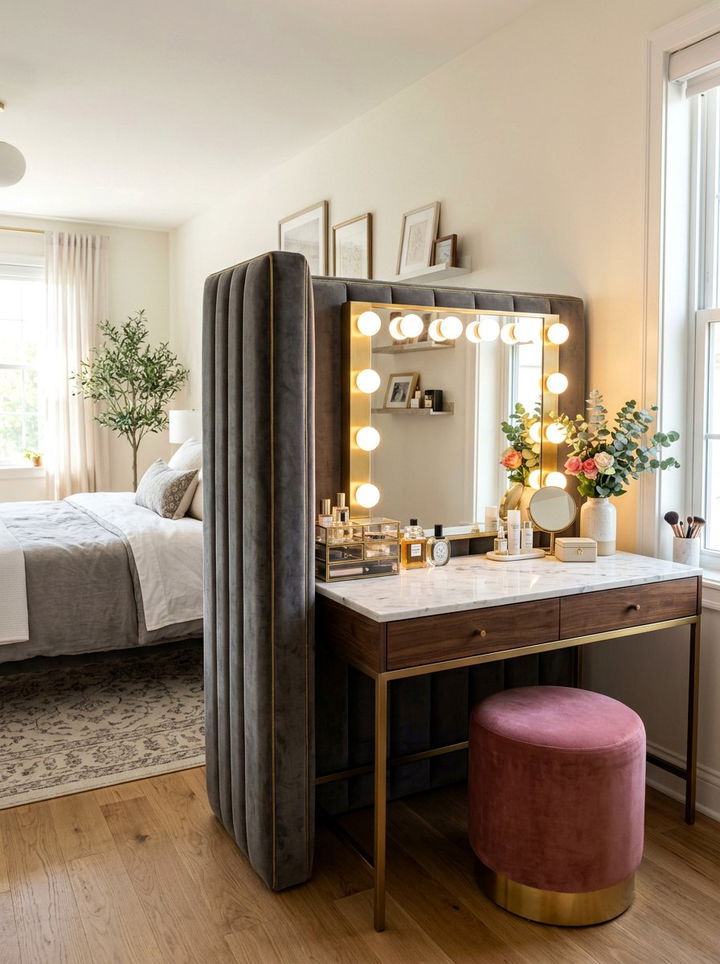
Positioning a vanity or a dressing table directly behind a freestanding headboard is a clever way to hide a grooming station. This layout uses the back of the bed as a divider, keeping the mirrors and makeup products out of sight when you are lying down. It creates a dedicated “getting ready” zone that feels private and organized. You can enhance this setup by adding a stylish stool and focused task lighting. This approach is ideal for large, square bedrooms where placing all furniture against the walls might leave too much empty space in the center of the room.
10. Wood Slat Wall Partition
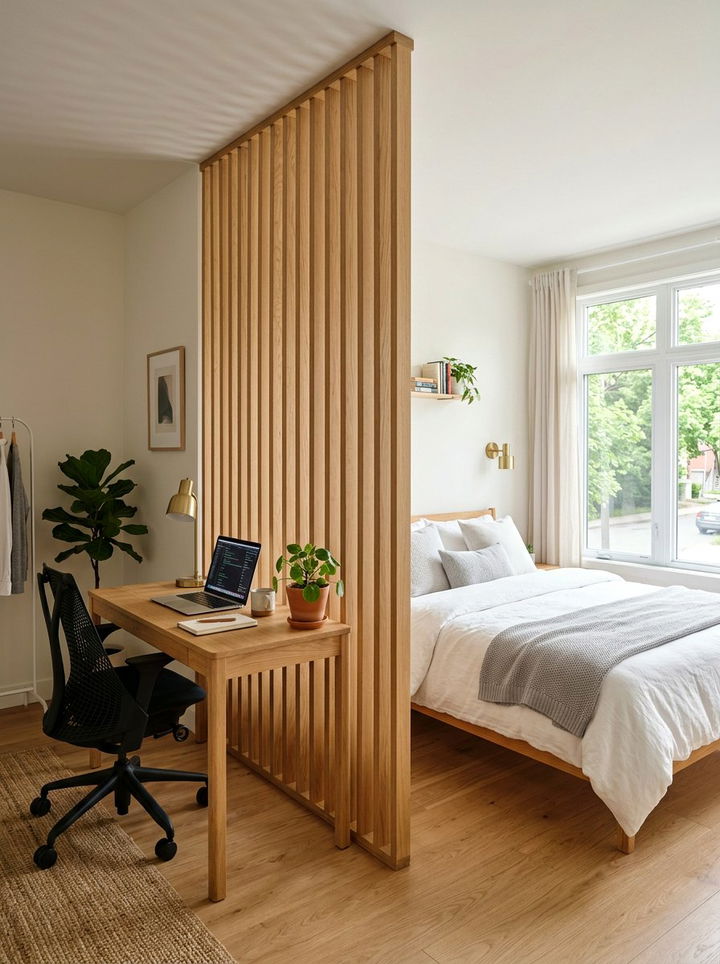
A wood slat wall offers a contemporary and organic way to divide a bedroom into distinct sections. These partitions allow light and air to flow through the gaps while still providing enough of a visual screen to separate a bed from a home office. The vertical lines of the wood slats can make the ceiling appear higher, adding a sense of grandeur to the space. You can use different wood tones to match your existing furniture or paint them for a more bold look. It is a permanent yet airy solution that adds beautiful texture and a modern architectural feel.
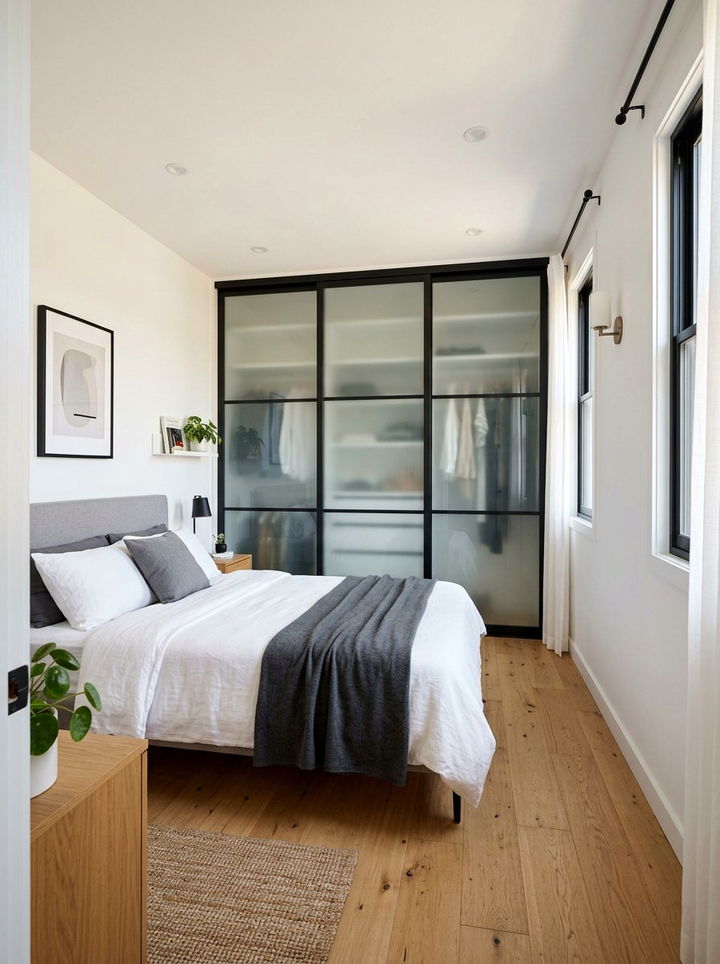
11. Bedroom Desk Behind Bed
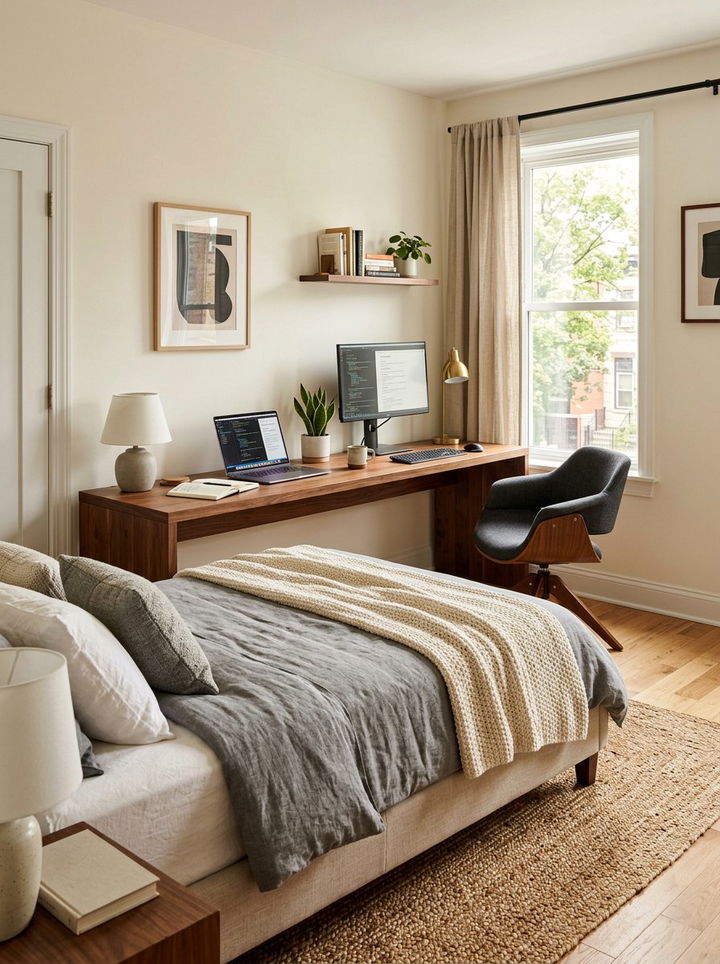
For those who need a home office but lack a separate room, placing a desk directly behind the bed is a smart layout choice. This configuration uses the bed as a natural barrier, so you are not staring at your workspace while trying to fall asleep. It effectively zones the room into a productive area and a restful area without needing to build any new walls. Make sure the desk is at a similar height to the headboard for a clean, integrated look. This setup works particularly well in rectangular rooms where you can float the bed in the middle of the space.
12. Painted Wall Section Bedroom Zone
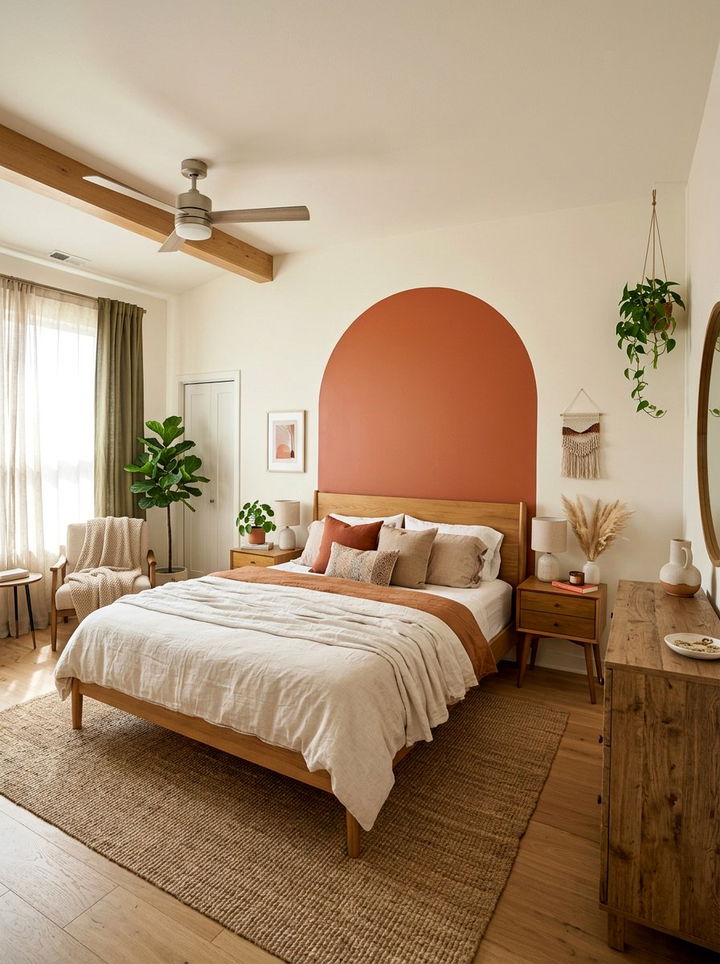
Color blocking is a simple and inexpensive way to zone a bedroom using nothing but paint. By painting a specific section of the wall in a different color, you can visually define where one zone ends and another begins. For example, a deep navy blue arch painted behind the bed creates a clear sleeping zone, while a soft terracotta on the opposite wall marks a vanity area. This technique adds depth and personality to the room without taking up any floor space. It is a fantastic option for small apartments where physical dividers might make the space feel too cramped.
13. Folding Screen Bedroom Corner
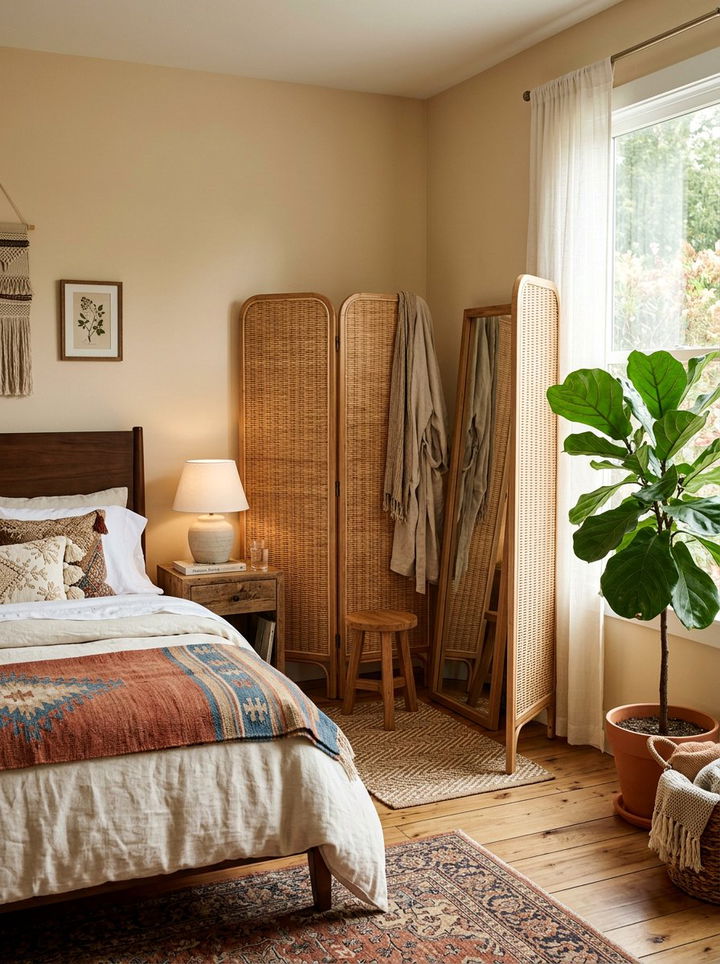
A decorative folding screen is a versatile accessory that can instantly hide a cluttered corner or create a private dressing area. These screens come in various materials, from intricate carved wood to woven rattan or fabric panels. Because they are lightweight, you can move them around as your needs change throughout the day. They add a layer of pattern and texture to the room while serving a functional purpose. When not in use, a folding screen can be tucked against a wall or used as a unique headboard alternative. It is a quick fix for better bedroom organization.
14. Bedroom Lounge Area Seating
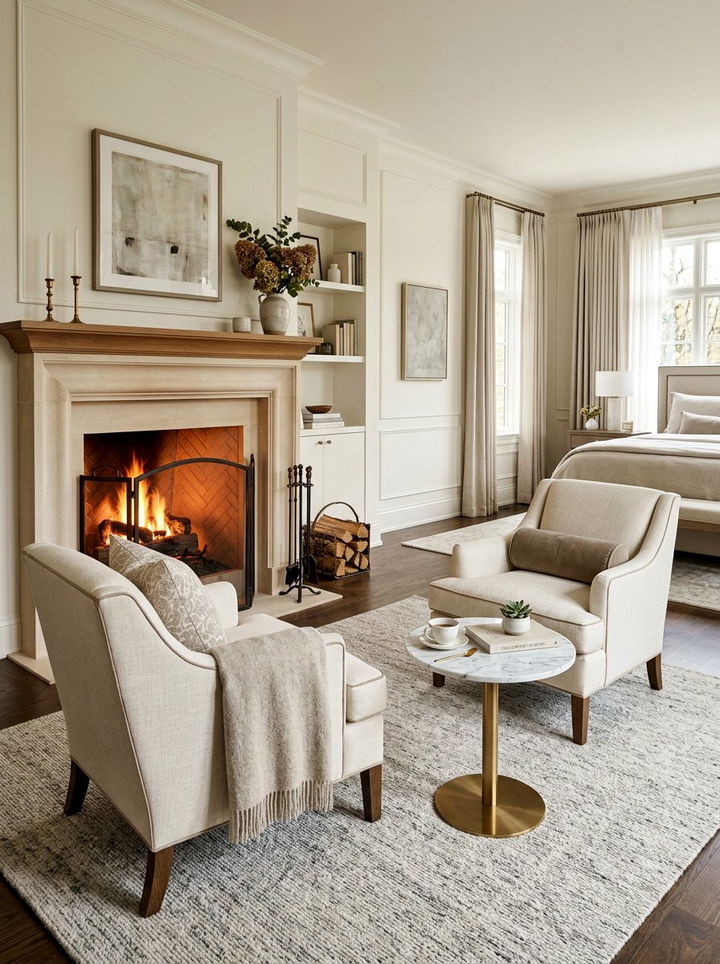
Creating a dedicated lounge zone with comfortable armchairs and a small side table can make your bedroom feel like a true retreat. This area provides a place to enjoy a morning coffee or have a conversation without sitting on the bed. To make this zone feel distinct, you can arrange the furniture facing away from the sleeping area or toward a window with a view. Use a different lighting scheme, such as a soft floor lamp, to set a more relaxed mood in this corner. It encourages you to use your bedroom for more than just sleeping during the day.
15. Hanging Plant Room Divider
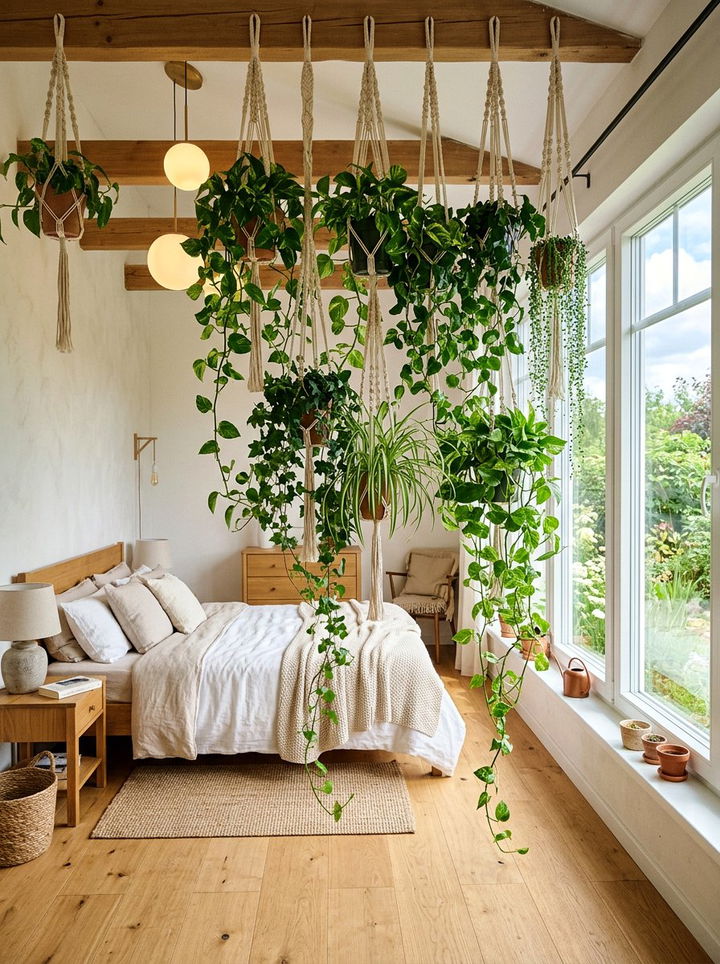
Using a row of hanging plants is a creative and natural way to zone a bedroom. You can hang trailing vines from the ceiling to create a “living curtain” that separates the bed from a window or a desk. This organic divider adds life, color, and texture to the room while maintaining an open and airy feel. It is a great way to bring the outdoors in, which is known to promote relaxation and better sleep. You can vary the heights of the plants to create a more dynamic and interesting visual screen that changes as the plants grow.
16. Two Tone Wall Paint Bedroom
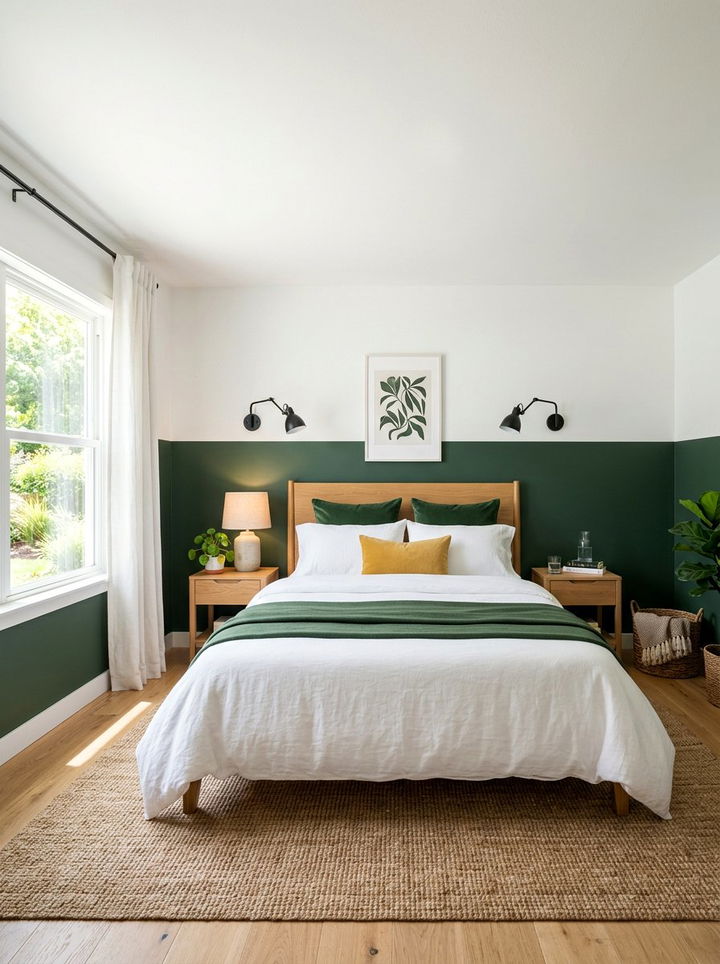
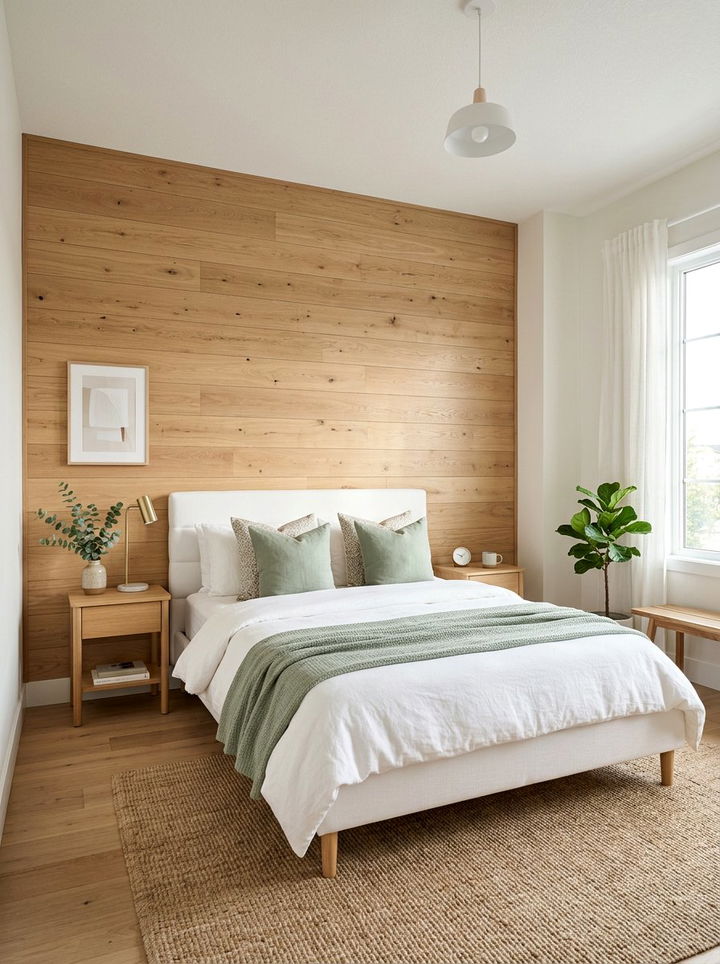
Using two different paint colors on your walls can help distinguish the sleeping zone from the rest of the room. You might choose a calming, neutral shade for the majority of the space and a darker, moodier color for the wall behind the bed. This “accent wall” approach creates a clear focal point and sets the tone for the rest area. It helps the eye understand the purpose of each part of the room through visual contrast. This method is especially effective when combined with matching accessories, such as pillows and rugs, that reinforce the chosen color palette.
17. Bedroom Exercise Area Mat
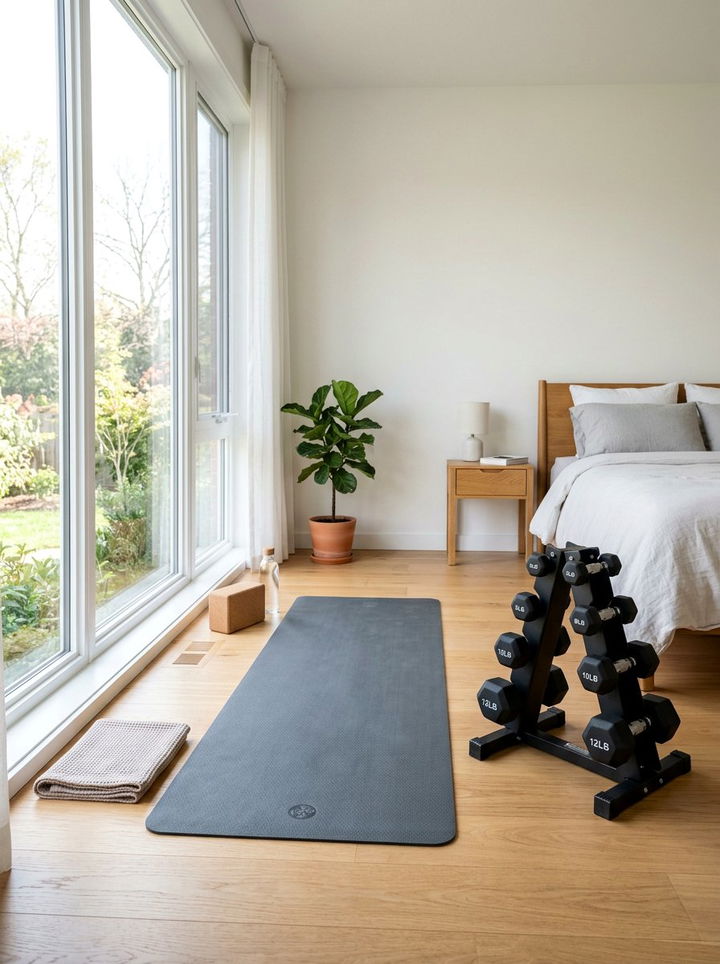
For fitness enthusiasts, a dedicated exercise zone in the bedroom can be defined by using a specific flooring material or a large permanent mat. This area should be kept clear of furniture to allow for movement and stretching. You can add a small storage rack for weights and yoga blocks to keep the equipment organized and out of the way. By designating a specific spot for your workout, you are more likely to stay consistent with your routine. This zone should ideally be near a window for fresh air or a mirror to check your form during your daily exercises.
18. Built In Wardrobe Room Splitter

A bank of built-in wardrobes can serve as a functional wall to divide a large master suite. Instead of placing the cabinets against a structural wall, you can install them in the middle of the room to create a “walk-through” closet. One side of the cabinets faces the bed, while the other side forms a private dressing area. This not only provides massive amounts of storage but also creates a high-end, boutique feel. You can finish the back of the wardrobes with mirrors, wallpaper, or wood paneling to ensure they look attractive from every angle of the bedroom.
19. Canopy Bed Frame Zone
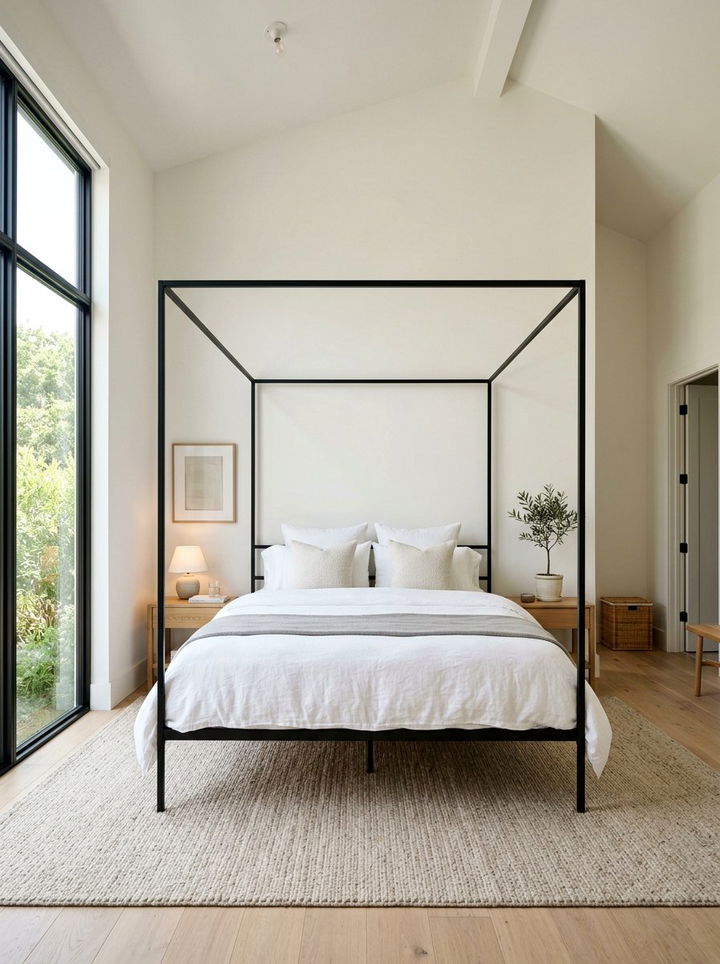
A canopy bed frame is a classic piece of furniture that naturally creates a “room within a room. ” The four-poster structure defines the sleeping zone vertically and horizontally, making the bed feel more secure and private. You can leave the frame bare for a modern look or add sheer fabric drapes for a more traditional and soft aesthetic. This zoning technique works well in rooms with high ceilings, as it helps to fill the empty volume and make the space feel more intimate. It draws the eye upward and makes the bed the undisputed center of the entire room design.
20. Bedroom Window Seat Bench
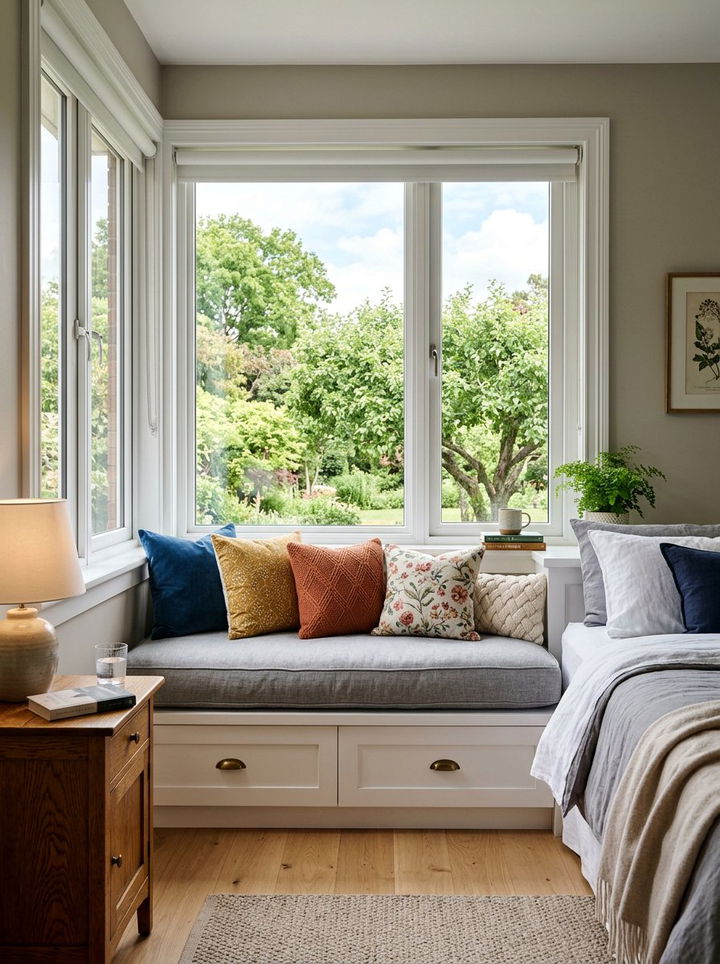
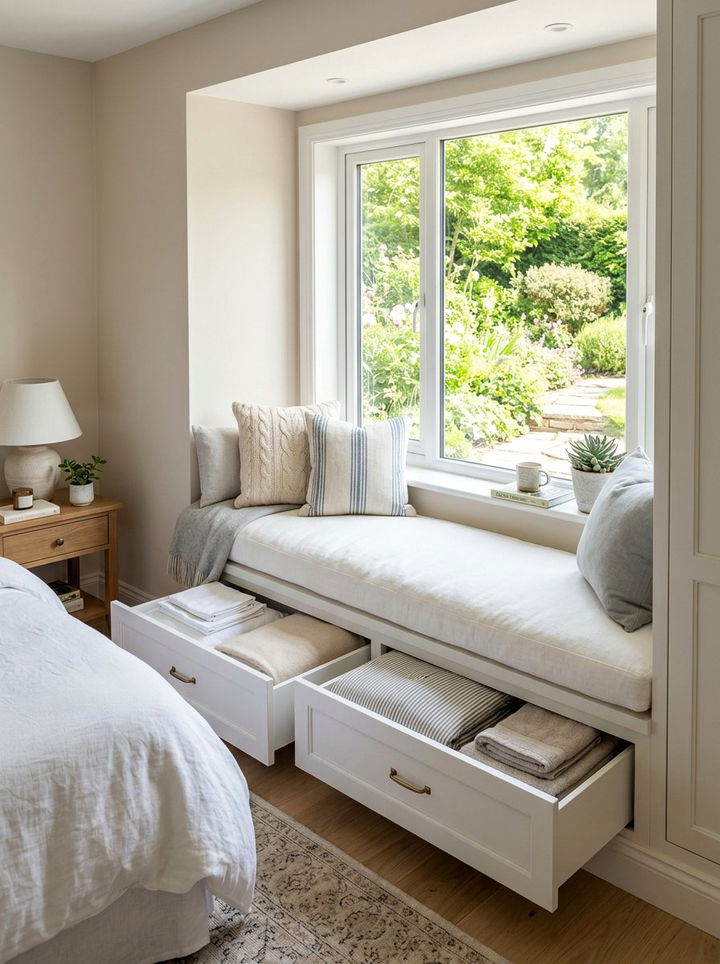
A window seat is a built-in zoning element that makes use of often-ignored space under a window. By adding a cushioned bench and some throw pillows, you create a perfect zone for relaxing and looking at the view. This area feels distinct from the rest of the bedroom because it is physically connected to the architecture of the house. It often includes hidden storage underneath the seat, which is perfect for stashing extra blankets or pillows. A window seat provides a cozy, sun-drenched spot that adds charm and character to any bedroom layout while maximizing functional floor space.
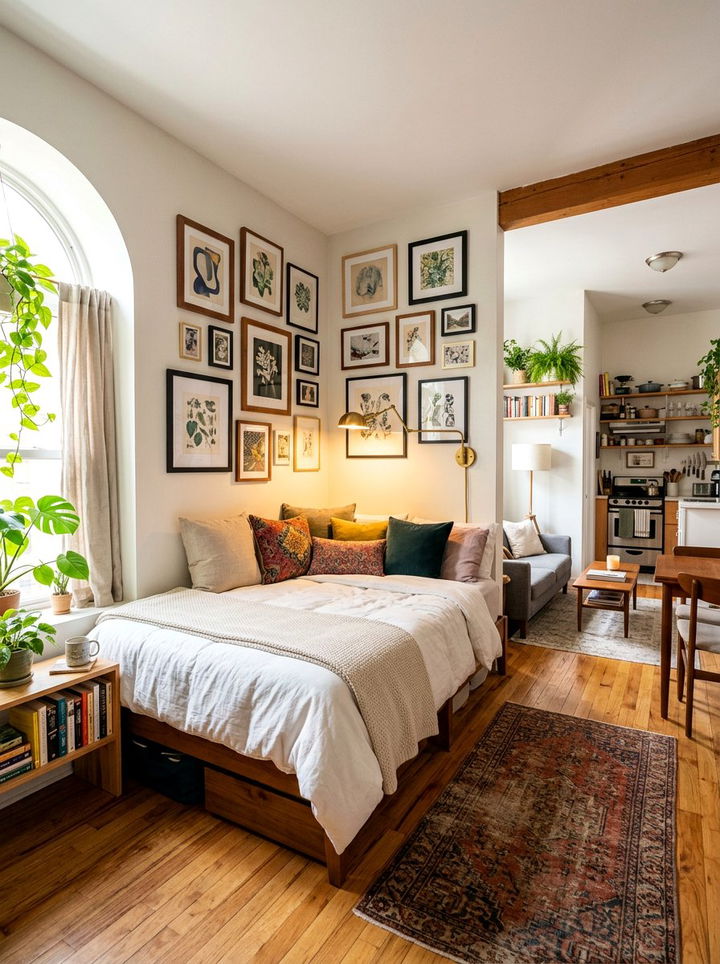
21. Half Wall Bedroom Partition
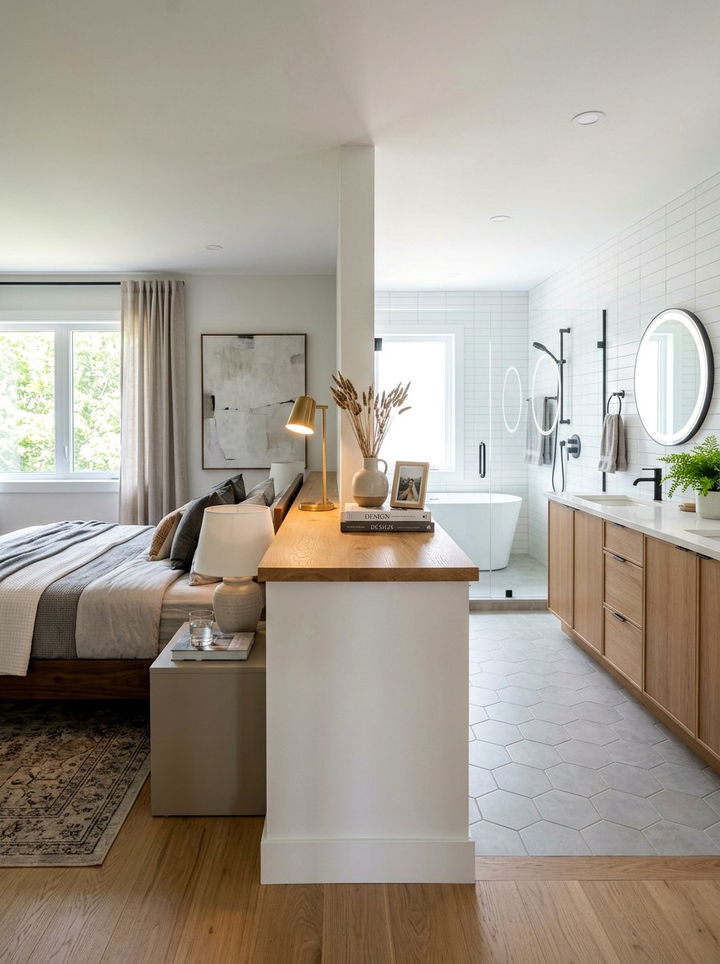
A half wall, also known as a pony wall, is a permanent architectural feature that provides separation without blocking sightlines. It is an excellent way to divide a bed from a bathroom or a home office while keeping the ceiling open. You can use the top of the half wall as a shelf for books, plants, or decorative items. This structural choice provides a solid physical boundary that makes the different zones feel like separate rooms. It is a great compromise for those who want the feeling of an open-plan space but still need some level of privacy and organization.
22. Statement Rug Under Bed

Placing a large statement rug directly under the bed is one of the easiest ways to zone the sleeping area. The rug should be large enough to extend at least two feet beyond the sides and foot of the bed. This creates a visual “island” that grounds the furniture and makes the bed feel like a cohesive unit. The texture of the rug also provides a soft place for your feet to land in the morning, enhancing the comfort of the sleep zone. Choosing a rug with a bold pattern or a unique color can further define this area as the room’s primary focus.
23. Bedroom Library Wall Bookshelf
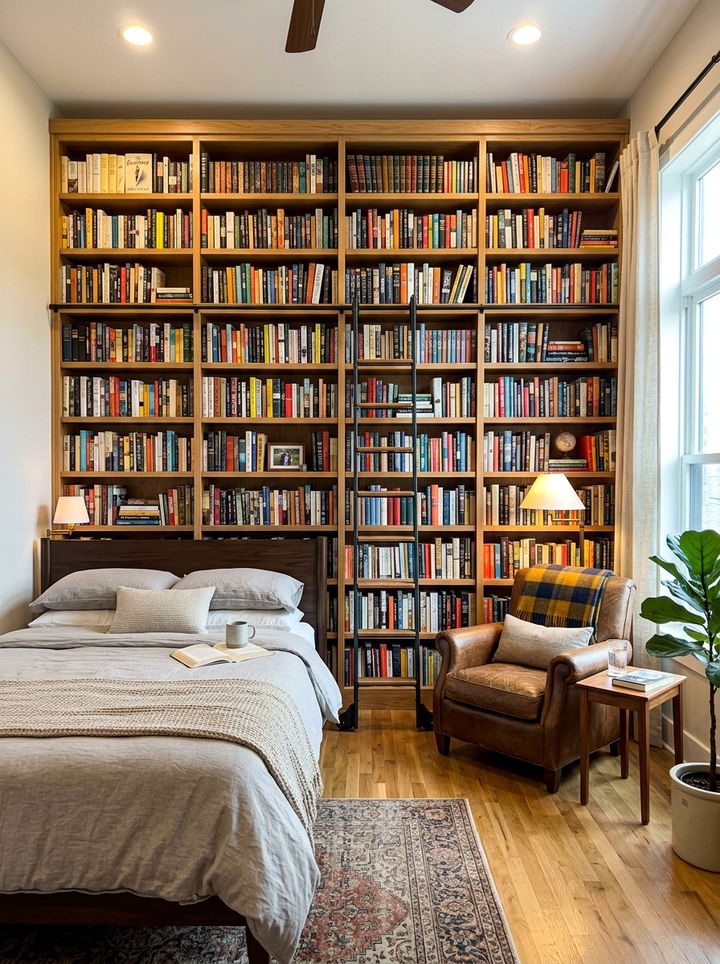
For book lovers, a floor-to-ceiling bookshelf can act as a stunning room divider that zones off a quiet reading area. You can fill the shelves with your favorite titles, creating a wall of color and texture that also dampens sound. This setup provides a sense of enclosure and privacy for the bed while offering a beautiful backdrop for the room. If the bookshelf is open-backed, it will still allow some light to filter through, preventing the space from feeling too dark. It is a functional and intellectual way to organize a bedroom while displaying your personal collection of books.
24. Sunken Bedroom Floor Level
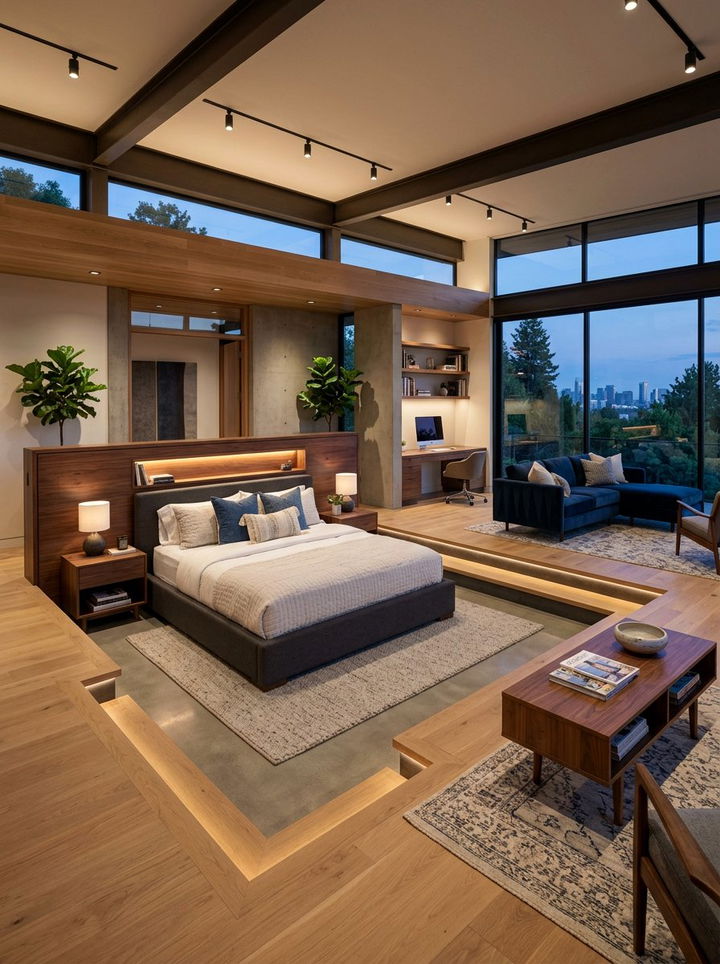
A sunken floor, or “conversation pit” style layout, is a dramatic way to zone a bedroom using different floor levels. By lowering the sleeping area by a few steps, you create a cozy and intimate nest that is physically separate from the rest of the room. This architectural technique is very effective in modern homes and provides a unique sense of luxury. The surrounding higher floor can be used for a walk-in closet, a desk, or a lounge. It creates a clear hierarchy of space and makes the bed area feel like a protected and very private sanctuary away from everything.
25. Metal Frame Glass Room Divider
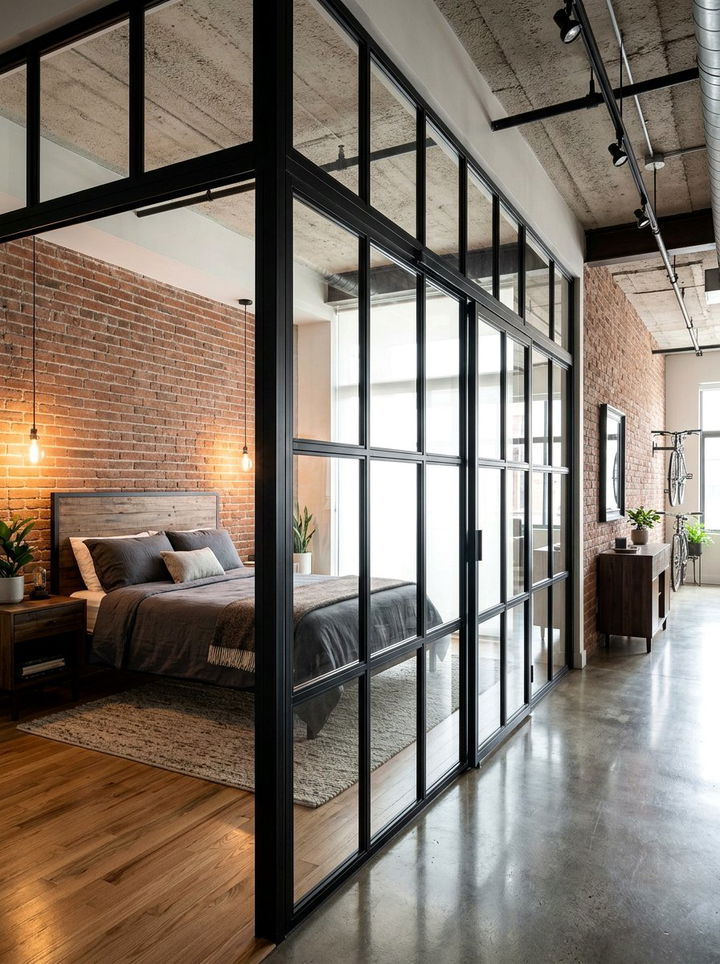
A black metal-framed glass divider is a popular choice for industrial-style bedrooms. This sleek partition separates the sleeping area from a bathroom or a hallway while maintaining a sense of transparency. The grid-like structure of the frame adds a strong graphic element to the room, making it look modern and well-designed. You can use large sliding glass doors or a fixed glass panel depending on your needs. This zoning method ensures that even the smallest bedrooms feel spacious and bright because there are no solid walls to stop the light from traveling through the entire open space.
26. Bedroom Dressing Room Corner
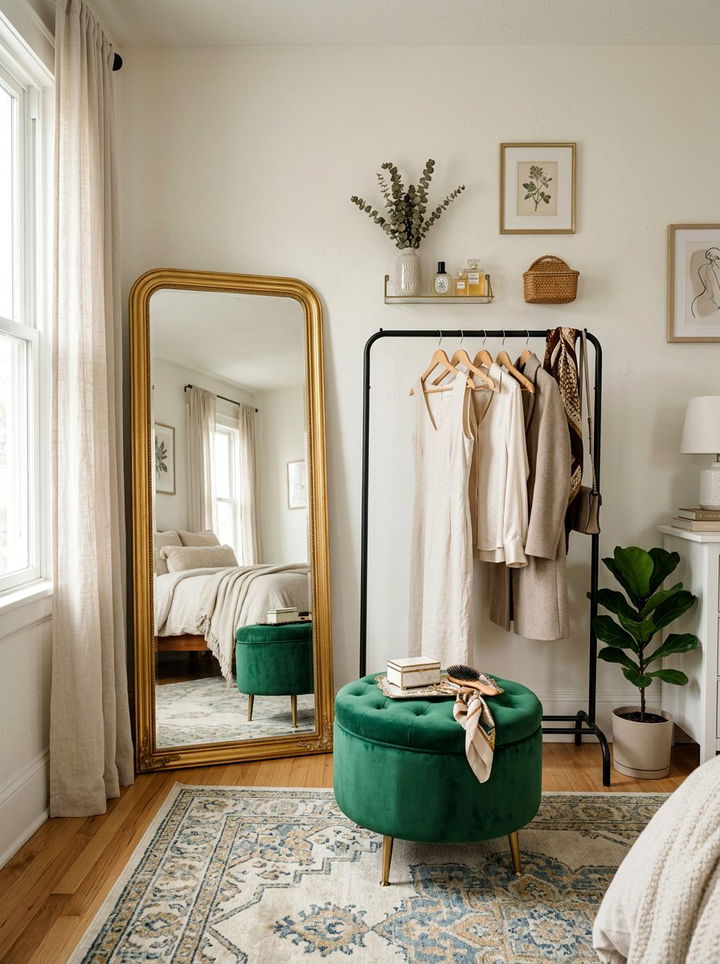
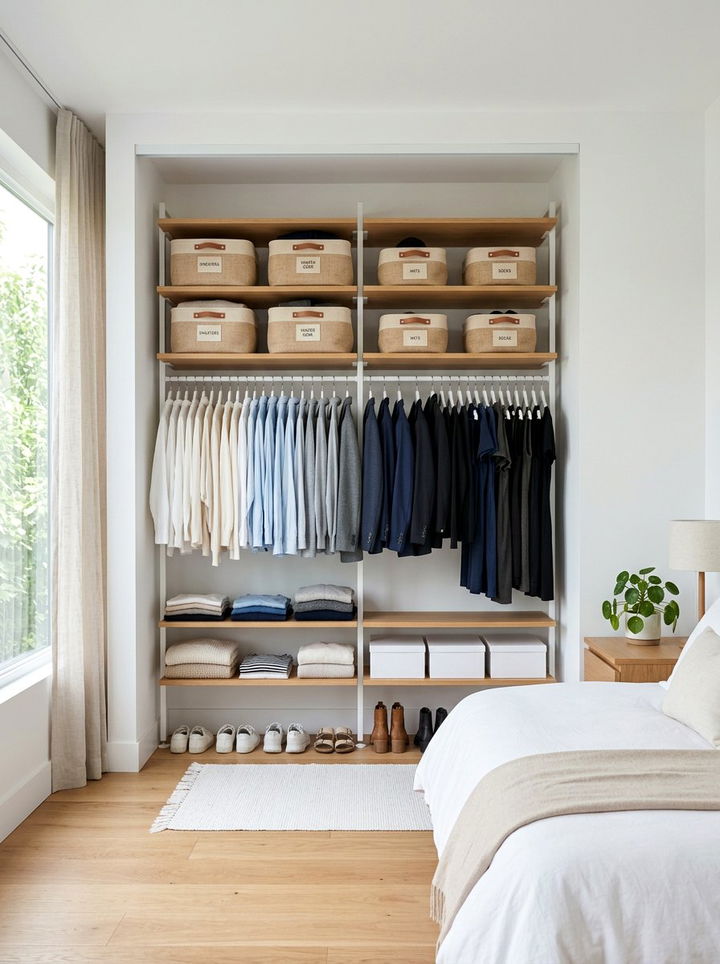
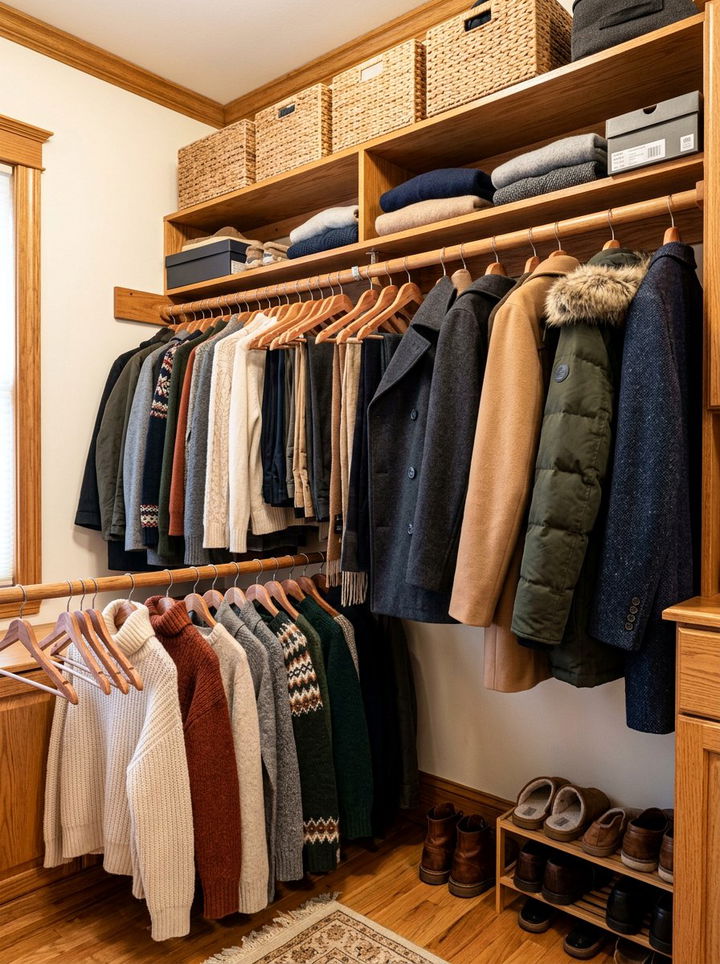
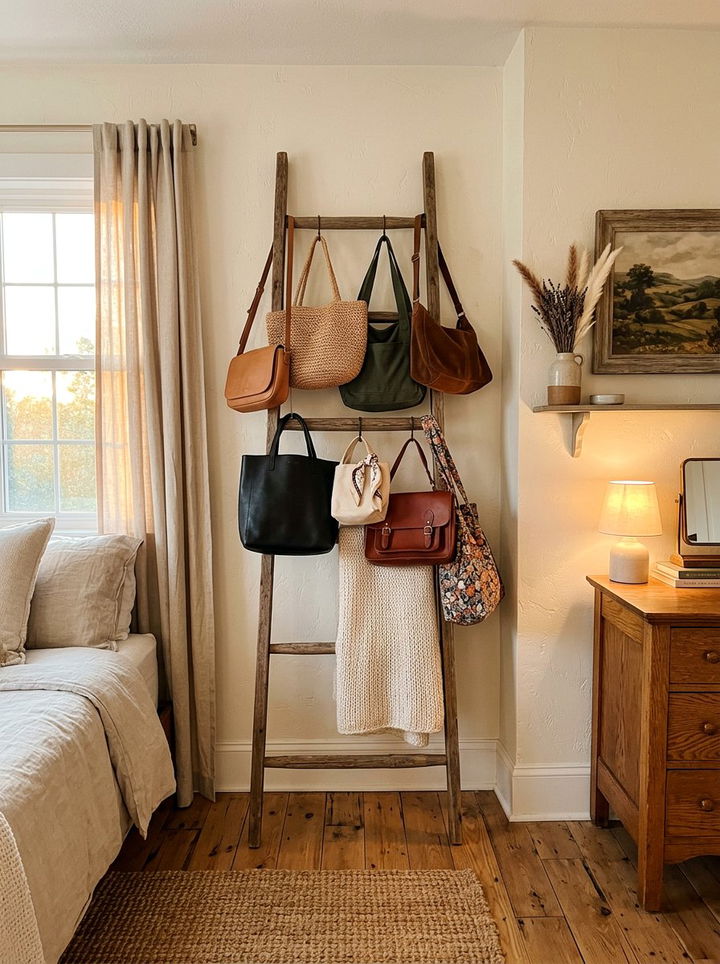
You can zone a dedicated dressing area in a corner of your bedroom by combining a full-length mirror, a clothes rail, and a small ottoman. This creates a specific “get ready” zone that keeps your clothes and accessories organized in one place. By grouping these items together, you prevent them from being scattered across the room, which helps maintain a sense of calm. You can use a different wall color or a small rug to further define this corner. This setup is perfect for those who do not have a separate walk-in closet but want the same level of luxury and organization.
27. Recessed Lighting Bedroom Zones
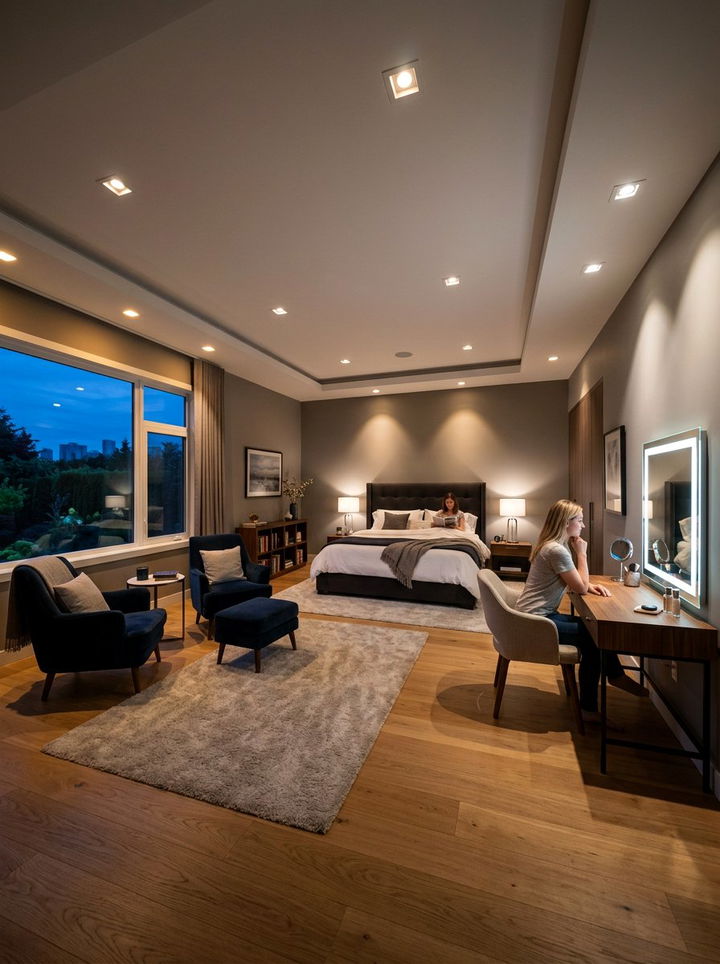
Lighting is a subtle but powerful way to zone a bedroom without using any furniture or walls. By using different lighting circuits, you can highlight specific areas at different times. For example, recessed spotlights can illuminate a dressing area, while soft pendant lights hang over the bedside tables. Dimmer switches allow you to change the atmosphere of each zone instantly. You can keep the office area bright and productive while the sleeping area remains dark and relaxing. This layered lighting approach helps the brain associate different parts of the room with different activities, improving both focus and sleep quality.
28. Corner Armchair Bedroom Reading Zone
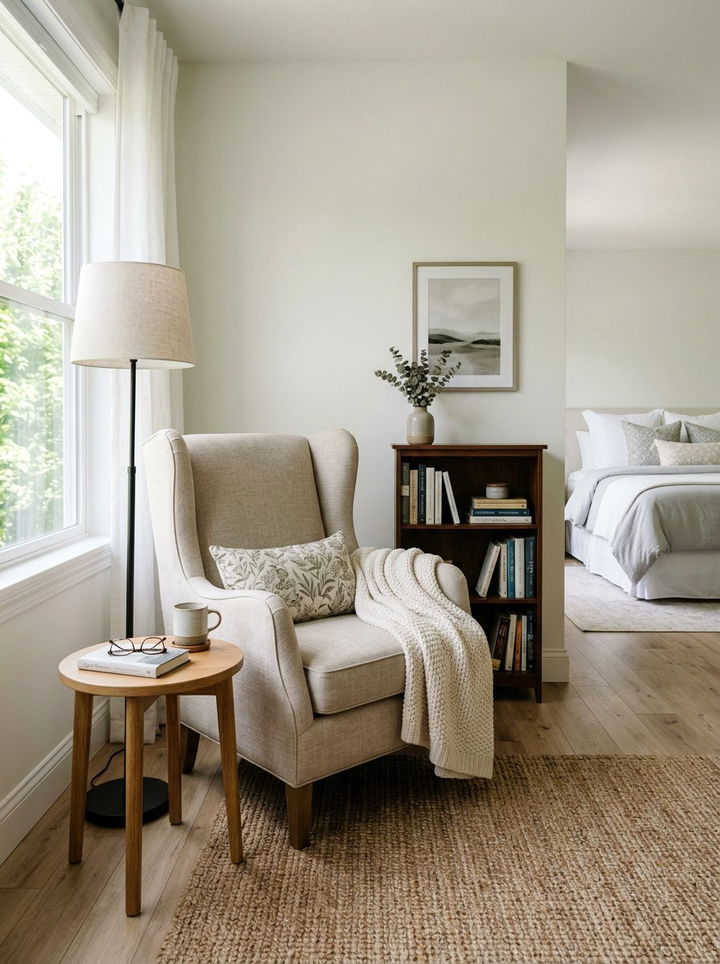
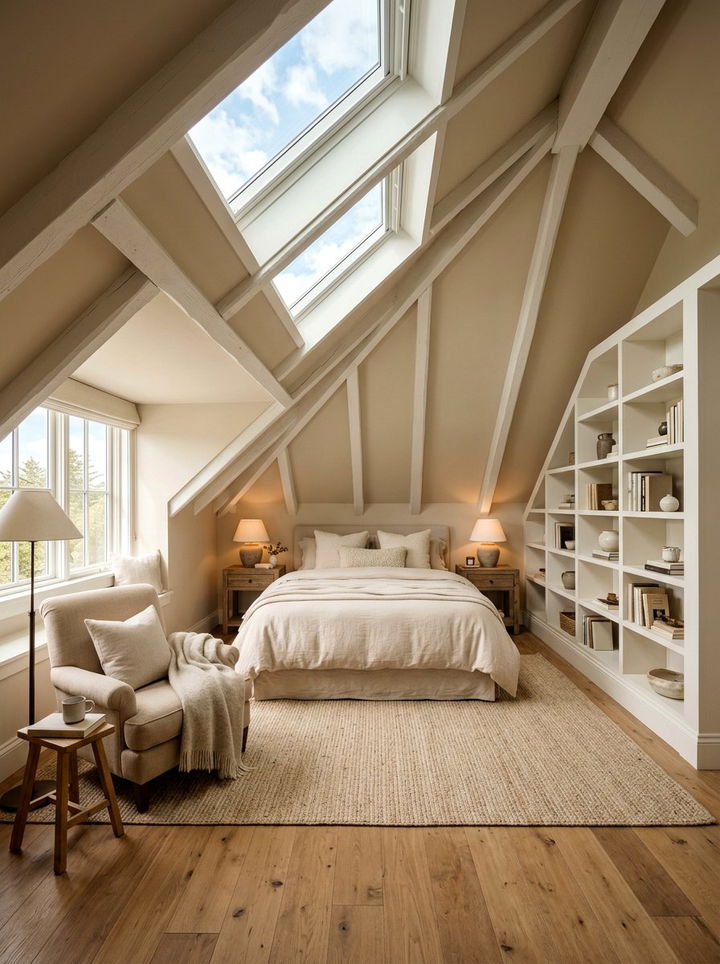
Adding a single, oversized armchair in a corner is a simple way to create a private retreat within your bedroom. This zoning idea is all about creating a sense of comfort and isolation from the main sleeping area. Pair the chair with a small side table for your tea and a dedicated floor lamp for evening reading. By angling the chair toward a window or away from the bed, you create a distinct mental space for relaxation. It is an easy way to make a large bedroom feel more filled and purposeful without needing to undergo any expensive or difficult renovations.
29. Freestanding Bathtub Bedroom Zone
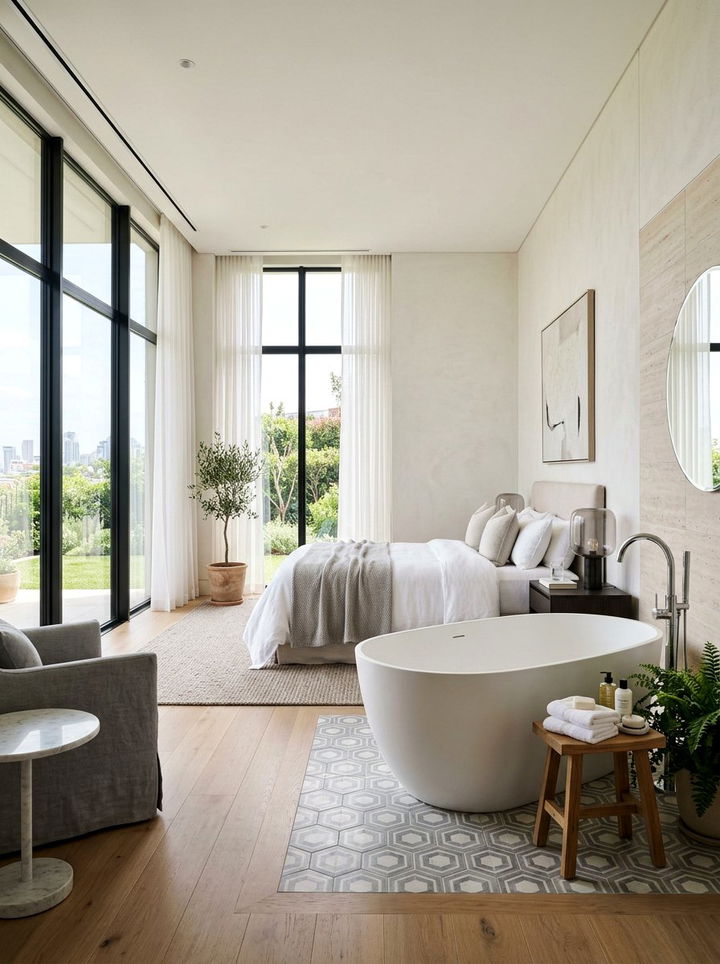
Integrating a freestanding bathtub into a master bedroom is the ultimate luxury zoning statement. This “open-plan ensuite” concept uses the tub as a sculptural element that defines the relaxation and grooming zone. You can place the tub on a different flooring material, like tile or stone, to clearly mark the wet area from the carpeted sleeping area. This design choice creates a spa-like atmosphere that encourages long soaks and total relaxation. It is a bold and modern way to combine two traditionally separate rooms into one large, cohesive, and very high-end suite that feels incredibly special and indulgent.
30. Vertical Garden Bedroom Divider
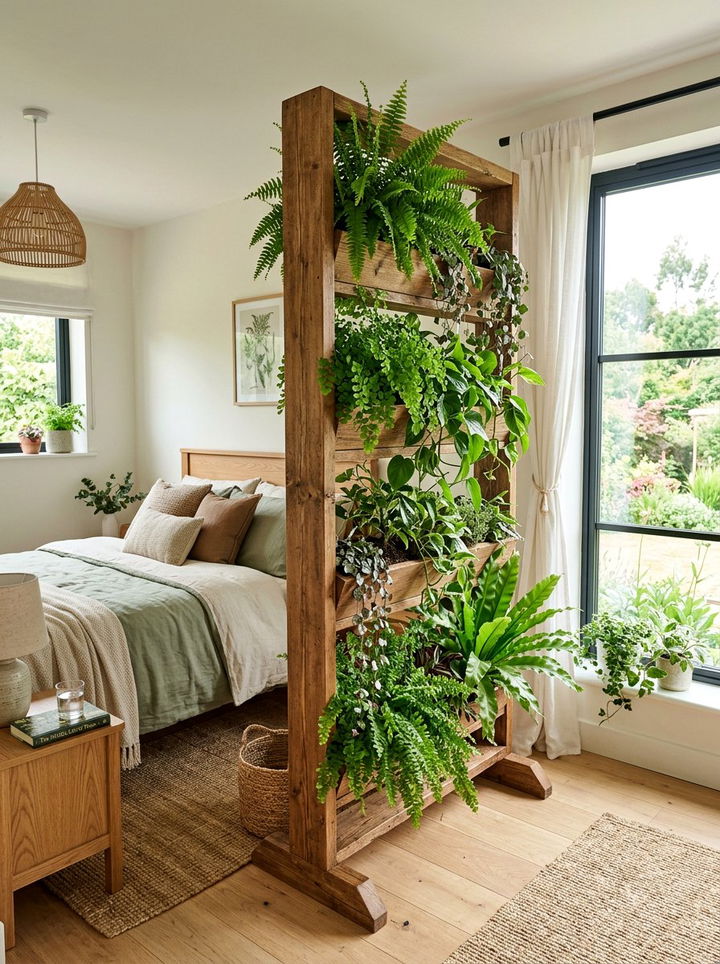
Bringing nature indoors is a refreshing way to divide a master suite while improving air quality and visual appeal. A vertical garden or a living wall acts as a lush, organic screen that separates the bed from a bathroom or a dressing area. You can use a freestanding wooden frame with built-in planters or a modular system of hanging pots to create this green partition. It introduces a variety of textures and vibrant colors that soften the hard lines of traditional furniture. This zoning technique is perfect for those who want a spa-like atmosphere that promotes relaxation and a deep connection to the natural world.
Conclusion:
Smart bedroom zoning is the secret to creating a space that feels both organized and deeply personal. By using a combination of furniture, lighting, rugs, and architectural elements, you can turn a single room into a multi-functional suite that caters to all your daily needs. Whether you choose the permanence of a glass partition or the flexibility of a folding screen, the goal is to create a harmonious balance between rest and activity. Implementing these ideas will not only make your home more functional but will also provide a sense of luxury and order. Start experimenting with these layouts to find the perfect configuration for your unique lifestyle.
Related posts: