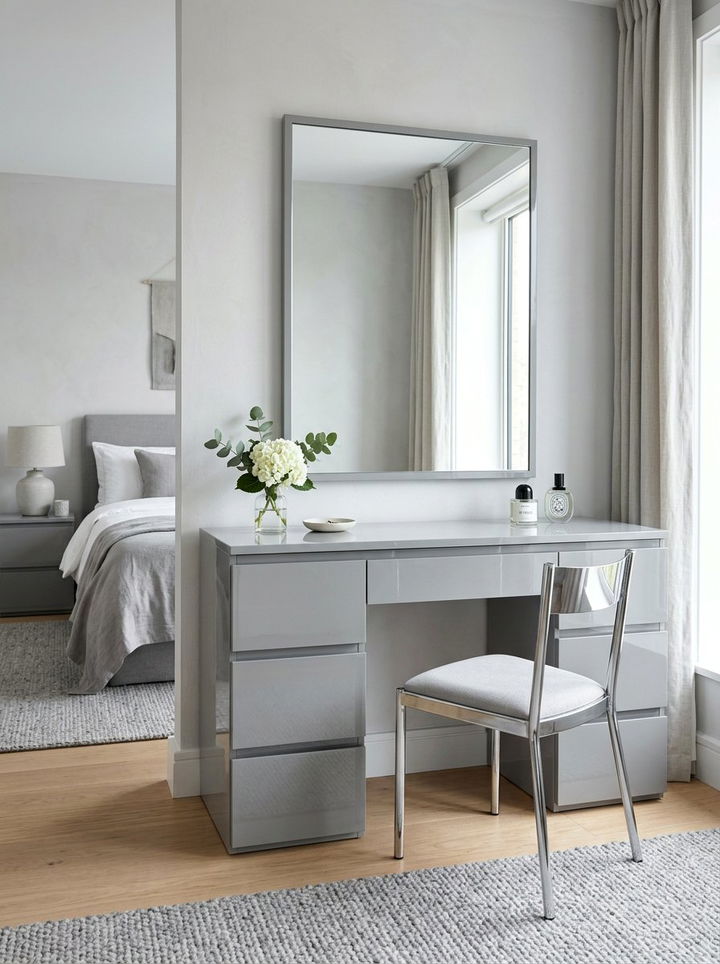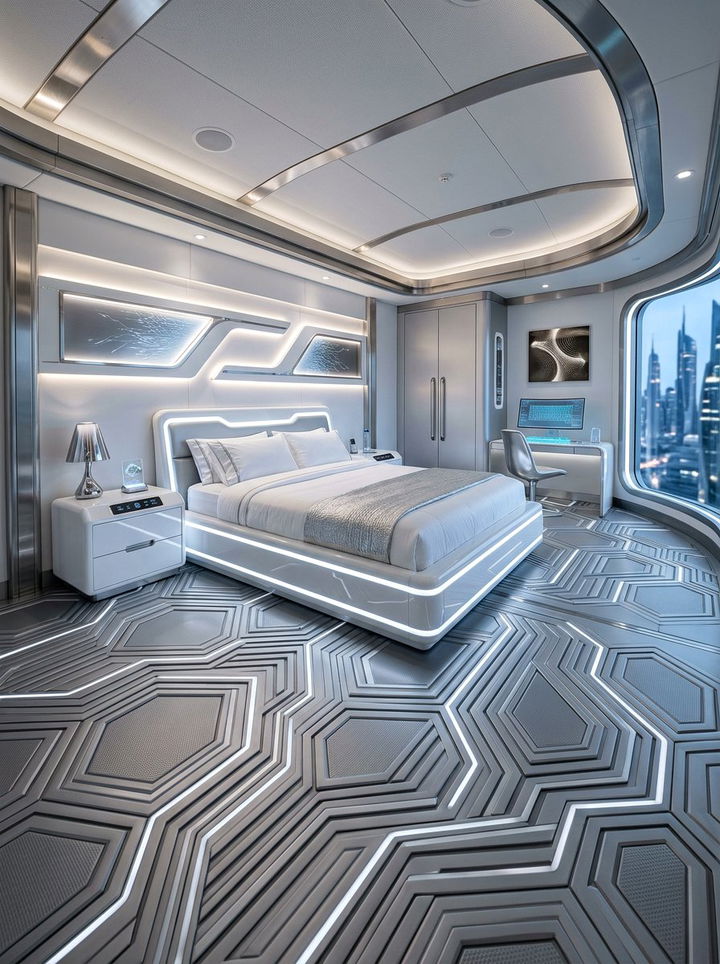
Creating a sanctuary that balances structural integrity with personal comfort is the hallmark of a great architecturally driven space. When you look at bedroom concepts from a professional perspective, you see more than just a bed and a dresser. You see the interplay of light, the honesty of materials, and the clever use of spatial volume that makes a room feel both expansive and cozy. These architect-inspired layouts focus on clean lines, intentional flow, and high-quality finishes that elevate the entire sleeping experience. Whether you are building a new home or looking to renovate, understanding these structural principles helps you create a timeless and functional retreat for rest. This guide explores how professionals utilize every square inch to maximize both aesthetic beauty and everyday practicality.
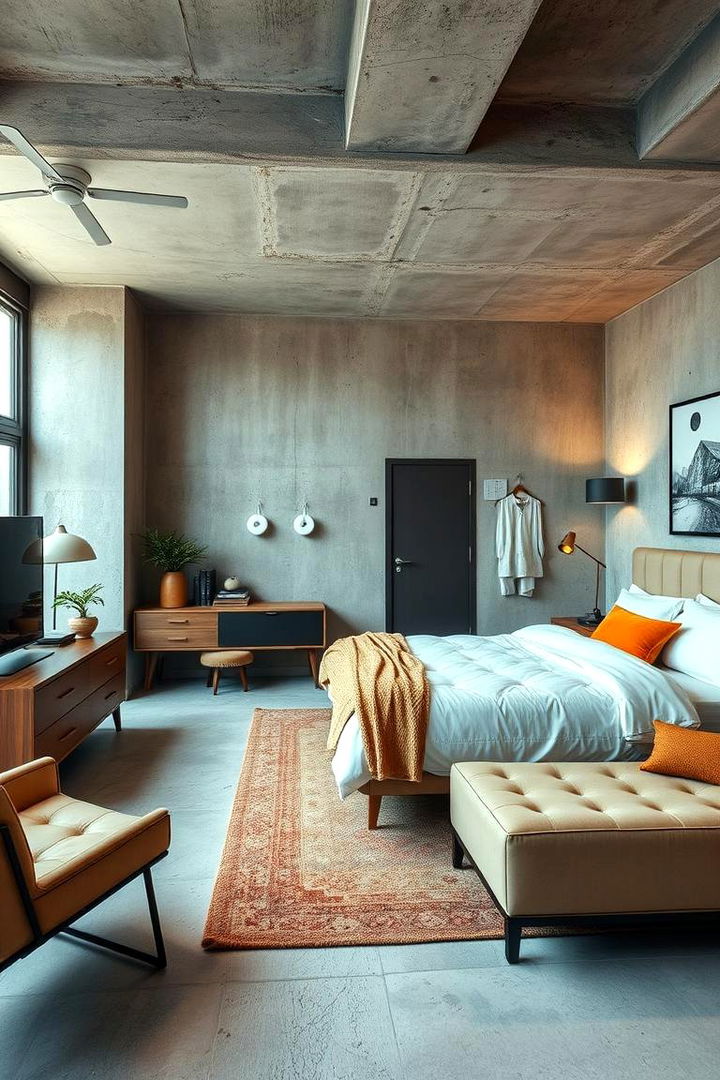
1. Minimalist Concrete Bedroom
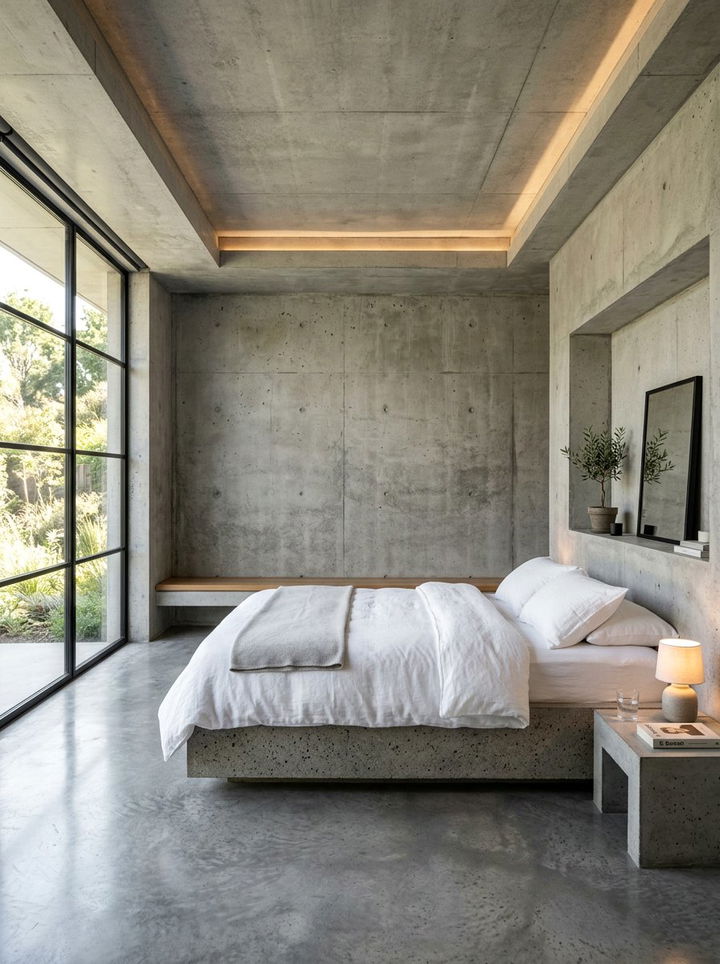
Have you ever wondered how raw materials can create such a sophisticated atmosphere without needing any extra clutter? A minimalist concrete bedroom relies on the natural texture of architectural concrete walls to provide a sense of permanence and cool serenity. These spaces often feature smooth, polished surfaces paired with soft textiles to balance the industrial feel with much-needed warmth. The layout typically keeps furniture to a minimum, allowing the structural elements to remain the primary focus of the entire room. By incorporating hidden recessed lighting and large windows, the gray tones become a canvas for shadows and light to dance across throughout the day. It is a perfect choice for anyone who appreciates the beauty of structural honesty in their private personal sanctuary.
2. Floor To Ceiling Window Bedroom
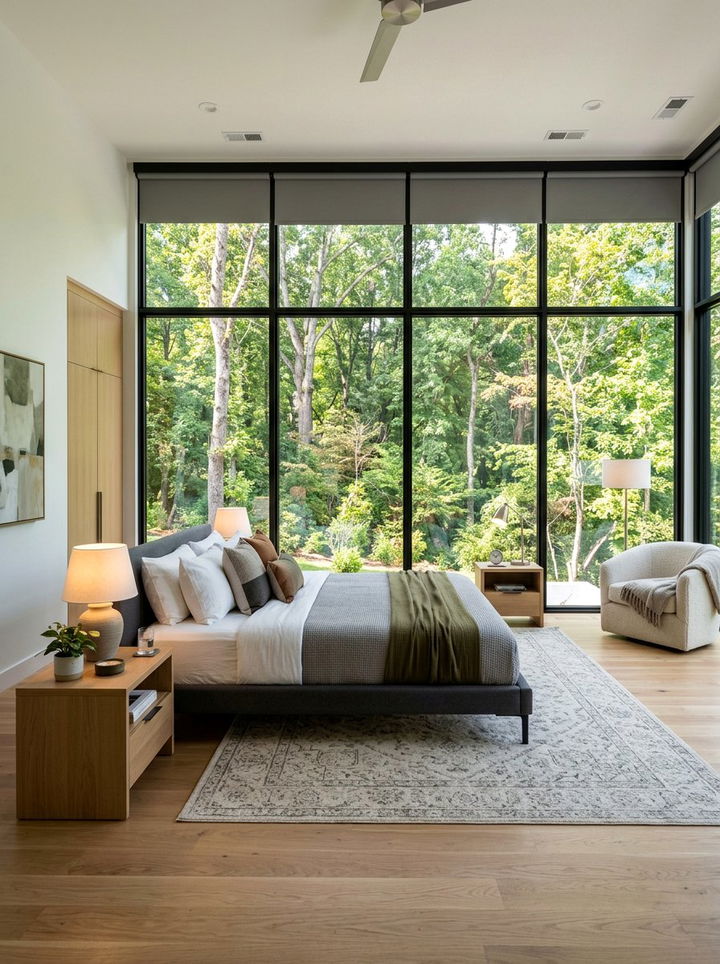
Imagine waking up every single morning to a panoramic view of the natural world right outside your glass walls. A bedroom featuring floor to ceiling windows dissolves the traditional boundary between the interior and the exterior, making the room feel significantly larger. This architectural approach relies on high-performance glazing and thin frames to ensure the view remains unobstructed and the temperature stays comfortable. To maintain privacy, many architects integrate motorized solar shades or thick floor-to-ceiling drapery that adds a soft texture to the room. The furniture is usually kept low to the ground so that it does not block the sightlines. It creates a stunning environment where the changing seasons provide a living wallpaper for your rest.
3. Timber Clad Bedroom
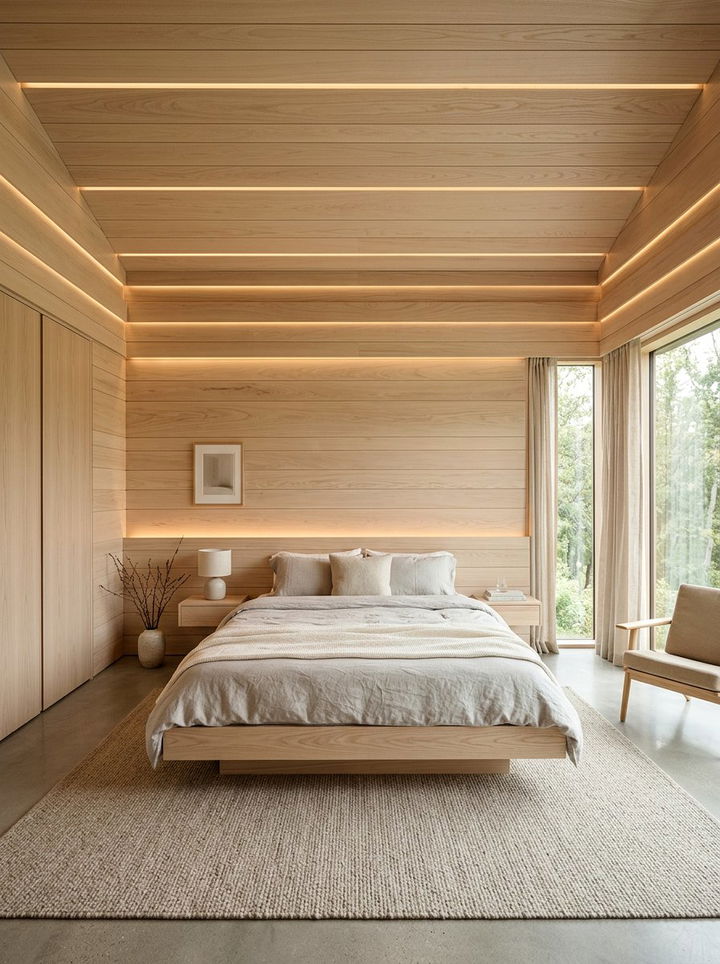
Walking into a room wrapped in warm wood instantly lowers your heart rate and makes you feel more connected to nature. Timber clad bedrooms use vertical or horizontal wood planks on the walls and ceilings to create a continuous, cocoon-like feeling. This design choice provides excellent acoustic properties, making the room much quieter and more peaceful for sleeping. Architects often choose light woods like oak or ash to keep the space feeling airy, or darker walnut for a more masculine and moody vibe. The natural grain of the wood adds a layer of organic detail that replaces the need for traditional wall art. It is a timeless structural choice that feels both modern and incredibly cozy.
4. Floating Bed Platform
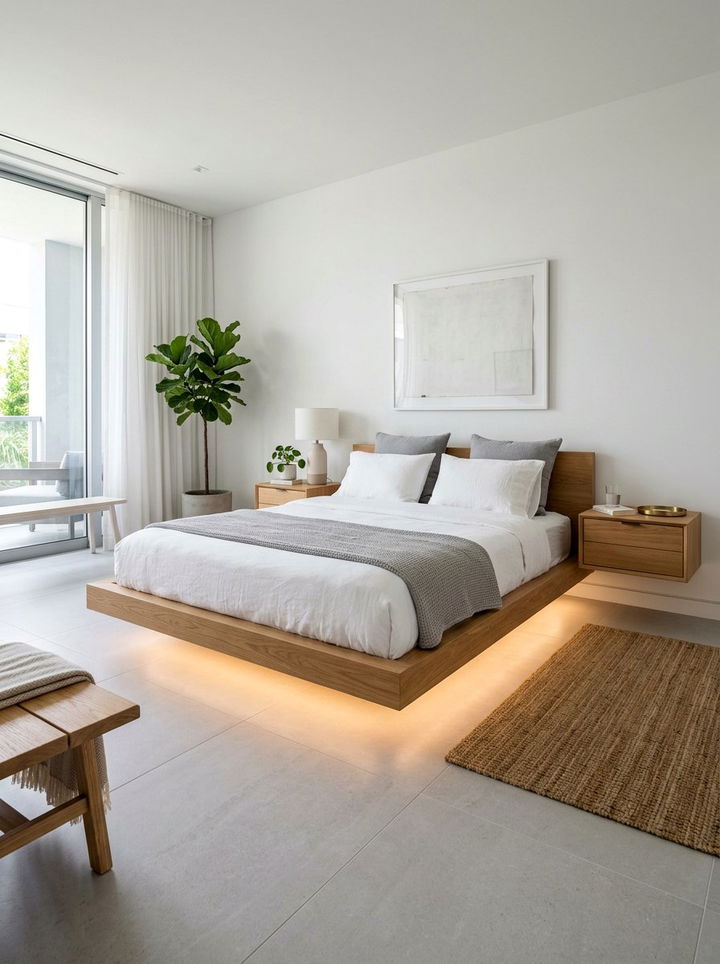
Does anything look more modern and sleek than a bed that appears to be hovering effortlessly above the floor? A floating bed platform is a classic architectural trick that creates a sense of lightness and simplifies the visual landscape of the room. These platforms are usually anchored to the wall or supported by a recessed central base that is hidden from view. This setup makes cleaning the floor much easier and allows for integrated LED lighting underneath to create a soft nightlight effect. By removing the bulky legs of a traditional bed frame, the room feels more open and spacious. It is an ideal solution for small bedrooms where maintaining a sense of floor area is critical.
5. Glass Wall Bedroom
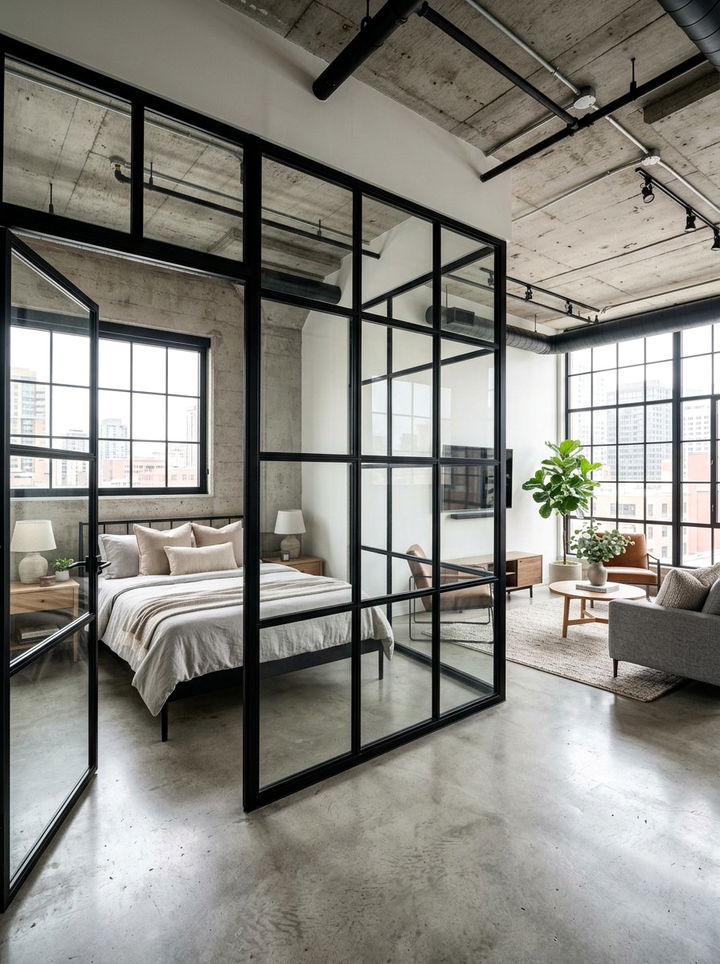
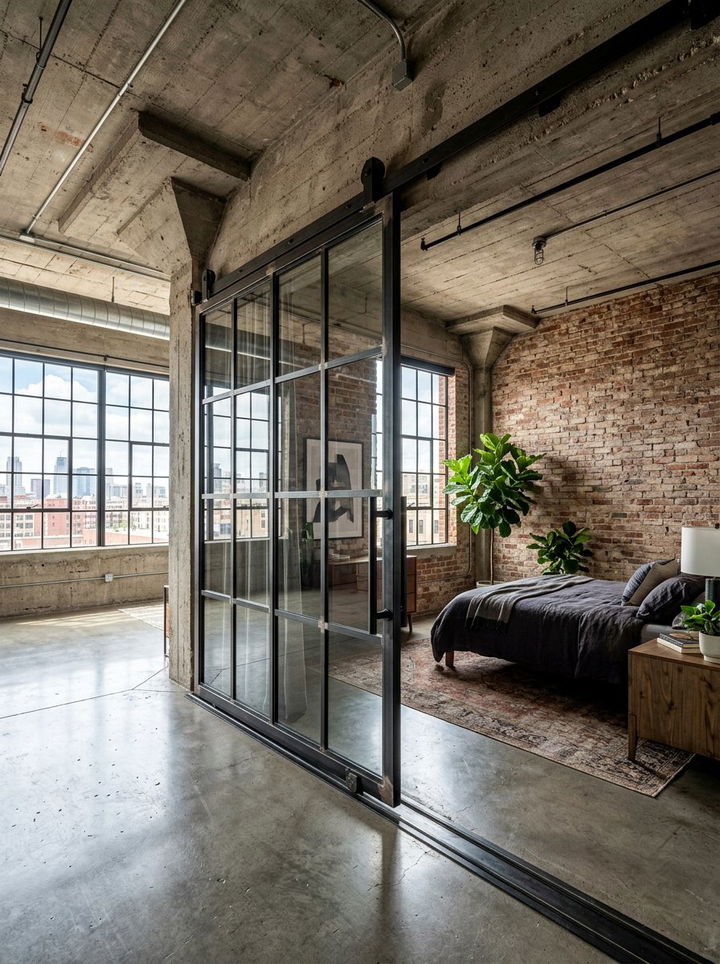
What happens when you want to divide a space without losing the sense of openness and light flow? A glass wall bedroom uses internal glazing, often with black steel frames, to separate the sleeping area from a home office or living space. This is a popular choice in modern lofts or studio apartments where structural walls would make the environment feel cramped. Using ribbed or frosted glass can provide the necessary visual privacy while still allowing natural light to penetrate deep into the interior floor plan. It adds a sophisticated, industrial edge to the home while maintaining a functional layout. This architectural feature transforms a simple room into a dynamic and multi-functional living environment.
6. Exposed Brick Loft Bedroom
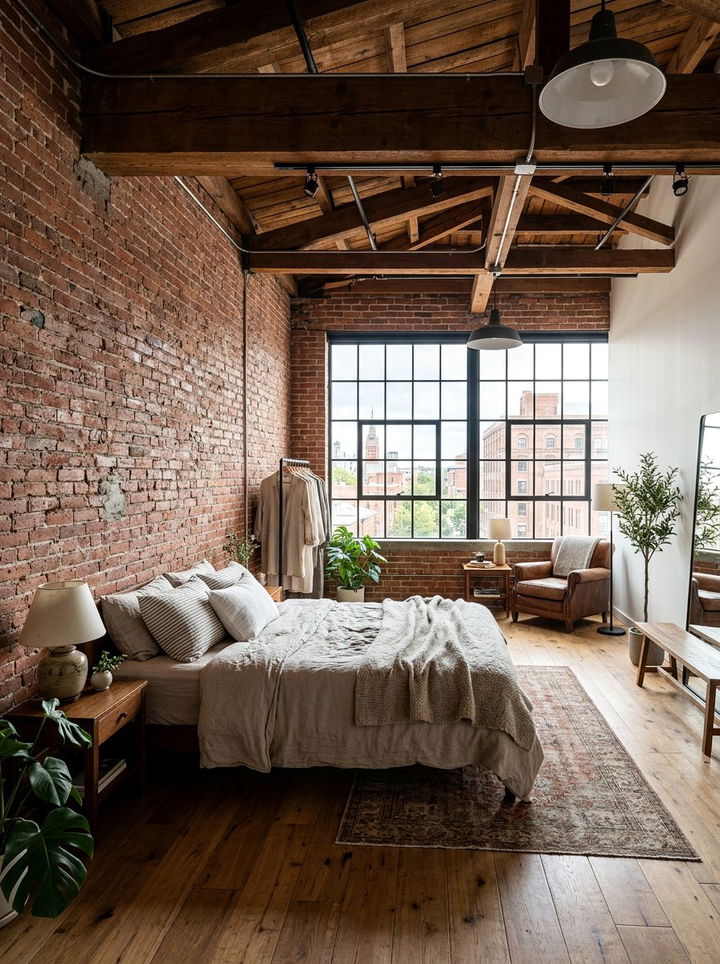
There is something inherently charming and authentic about the rugged texture of an old exposed brick wall in a bedroom. This architectural feature brings a sense of history and character that is hard to replicate with modern drywall or wallpaper. Architects often leave these walls in their natural state or paint them white to brighten the space while retaining the tactile surface. When paired with high ceilings and industrial lighting, the brick creates a warm, urban aesthetic that feels incredibly stylish. To soften the hardness of the masonry, professionals suggest using plush rugs and soft bedding. It is a design that celebrates the building’s original skeleton while providing a cozy, textured backdrop for relaxation.
7. Modern Attic Bedroom
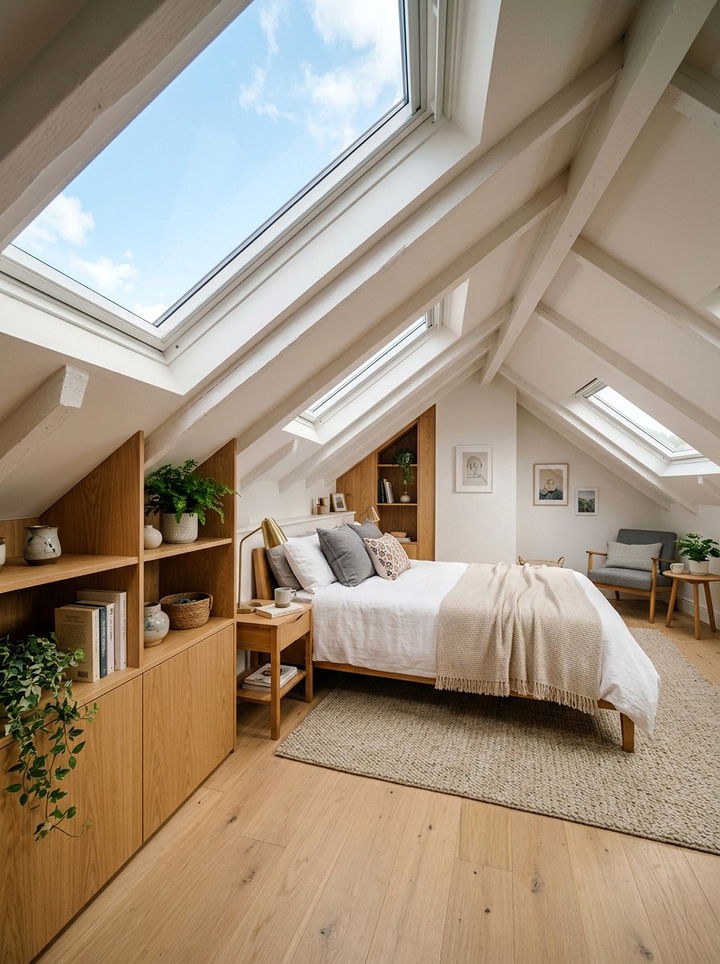
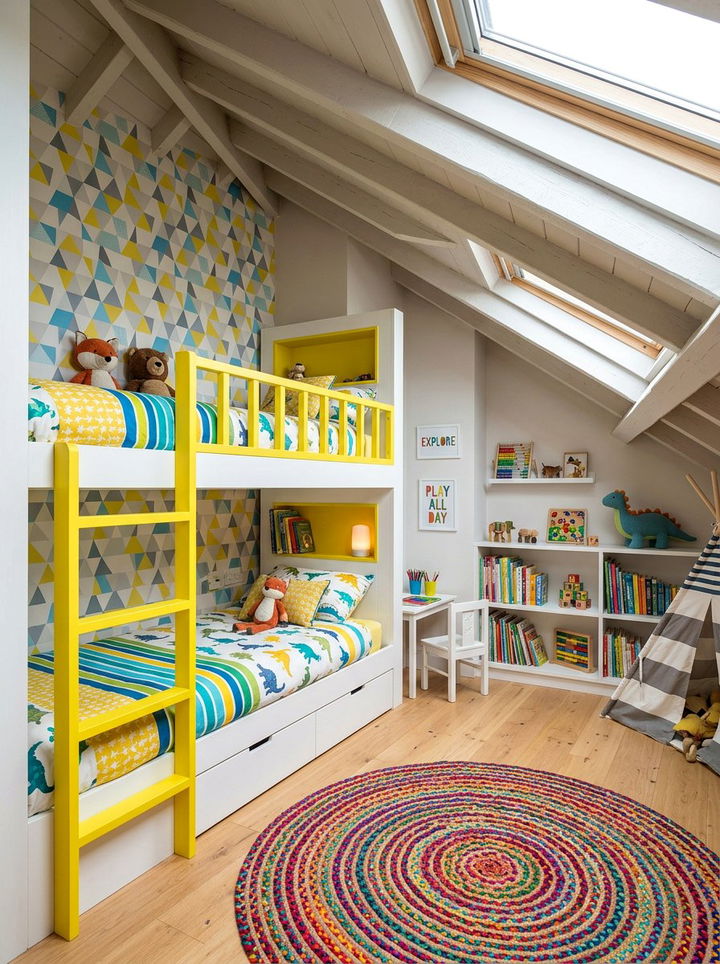
Converting an unused attic into a bedroom requires a clever understanding of sloping rooflines and tight architectural constraints. A modern attic bedroom utilizes every nook and cranny, often turning the lowest parts of the ceiling into built-in storage or cozy reading benches. Skylights are a crucial element in these spaces, as they flood the room with natural light from above and provide a view of the stars. The unique angles of the roof provide a sense of architectural drama that you simply do not find in standard rectangular rooms. By keeping the color palette light and the furniture streamlined, these spaces feel like a secret, airy hideaway. It is the ultimate way to maximize square footage.
8. Integrated Shelving Bedroom
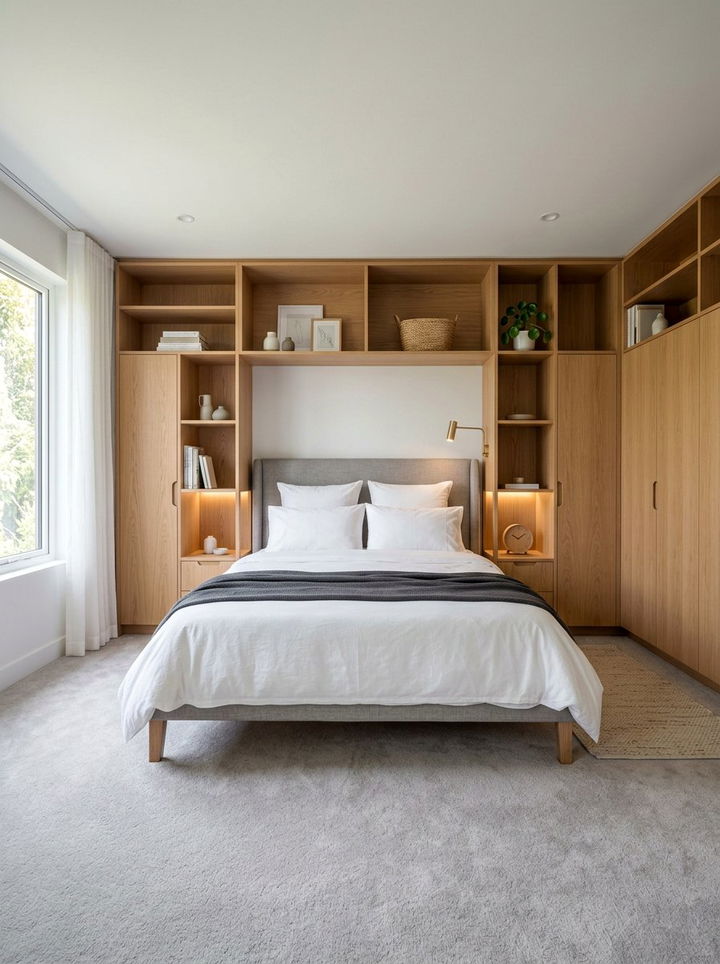
Why waste space on bulky, freestanding bookcases when you can have storage built directly into the very walls of your room? Integrated shelving is a favorite tool for architects who want to create a clean, streamlined look while providing plenty of room for books and decor. These shelves are often designed to frame the bed or run along an entire wall, creating a functional feature that feels part of the architecture. By using the same material for the shelves as the walls, the storage becomes almost invisible. This approach eliminates visual clutter and ensures that the bedroom remains a calm and organized space. It is a smart way to merge utility with high-end interior design.
9. Brutalist Bedroom

If you love bold statements and heavy materials, a brutalist-inspired bedroom might be the perfect architectural choice for your home. This style is characterized by the use of raw, unfinished materials like poured concrete, heavy stone, and thick timber. The geometry of the room is usually very strong, with sharp lines and a focus on the weight of the structure itself. While it might sound harsh, a brutalist bedroom can be incredibly peaceful when balanced with soft, monochromatic bedding and warm, ambient lighting. The simplicity of the forms creates a meditative environment that feels shielded from the outside world. It is a sophisticated take on modern design that prioritizes form and material honesty.
10. Mid Century Modern Bedroom
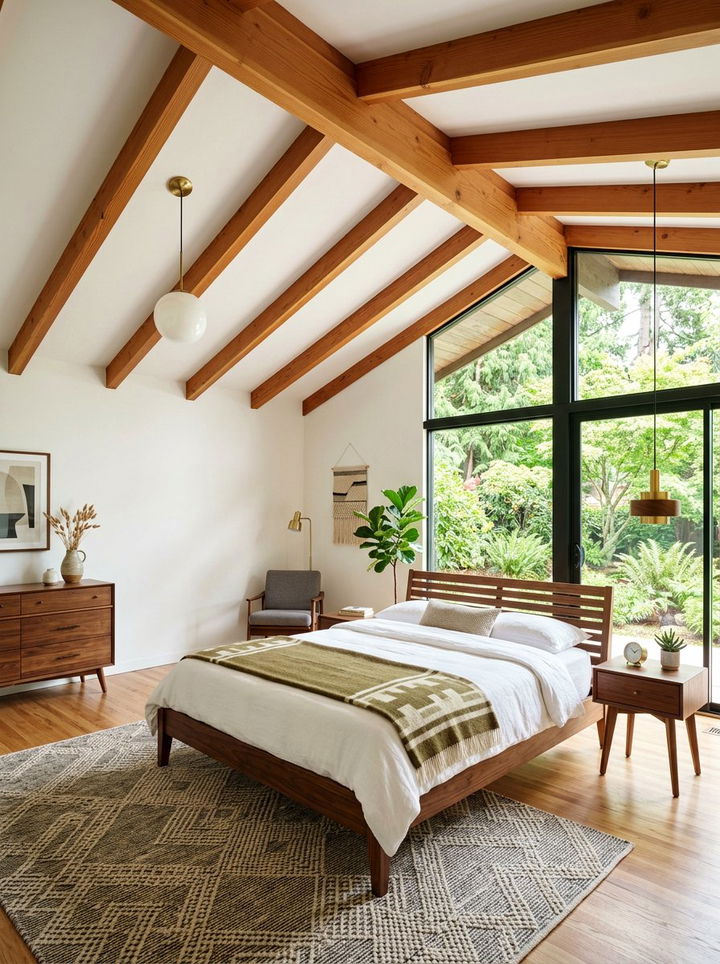
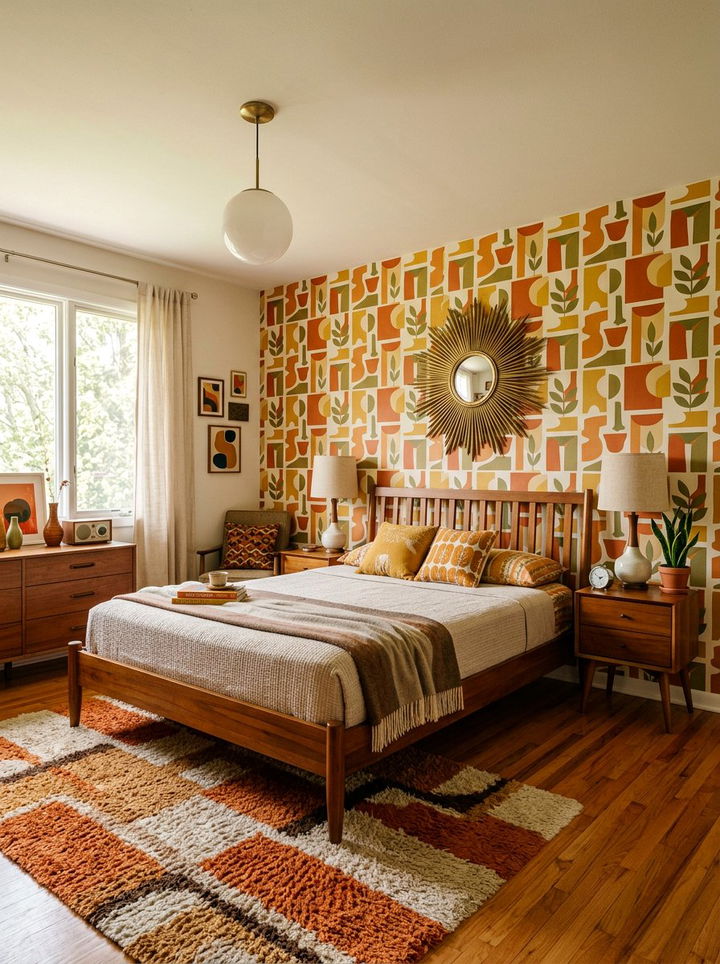
Bringing the classic elegance of the 1950s into the modern era, a mid-century modern bedroom focuses on organic shapes and functional design. This architectural style often includes features like large windows, vaulted wood-beam ceilings, and a seamless transition to the outdoors. The furniture usually features tapered legs and warm wood finishes that add a vintage yet timeless appeal to the space. Architects love this style because it prioritizes human-scale comfort and celebrates the beauty of natural materials without being overly ornate. By adding a few iconic light fixtures and a neutral color palette, you can create a room that feels both historic and fresh. It is a celebration of classic structural design principles.
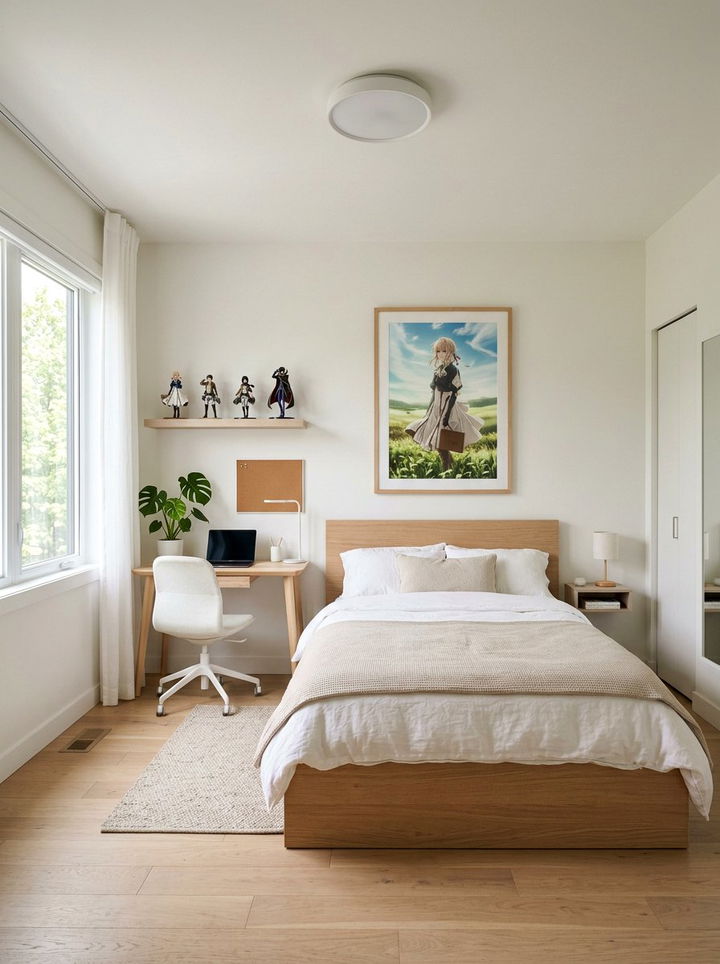
11. Scandi Style Bedroom
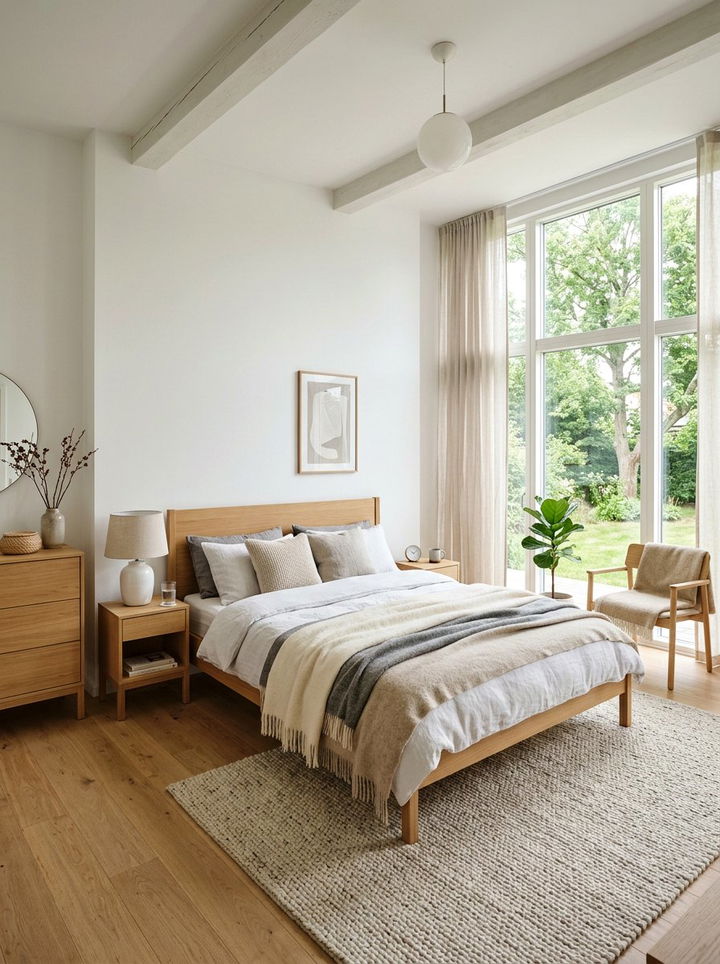
Simplicity, light, and functionality are the three pillars that hold up a beautifully designed Scandi style bedroom. This architectural approach focuses on maximizing natural light through large windows and using a palette of whites, grays, and light woods. The goal is to create a “hygge” environment that feels warm and inviting, even in the middle of a long, dark winter. Furniture is usually minimalist with clean lines, and there is a heavy emphasis on natural textiles like wool and linen. By keeping the floor plan open and clutter-free, the room becomes a peaceful sanctuary for the mind. This style proves that you do not need a lot of items to create a luxury feel.
12. Industrial Steel Bedroom
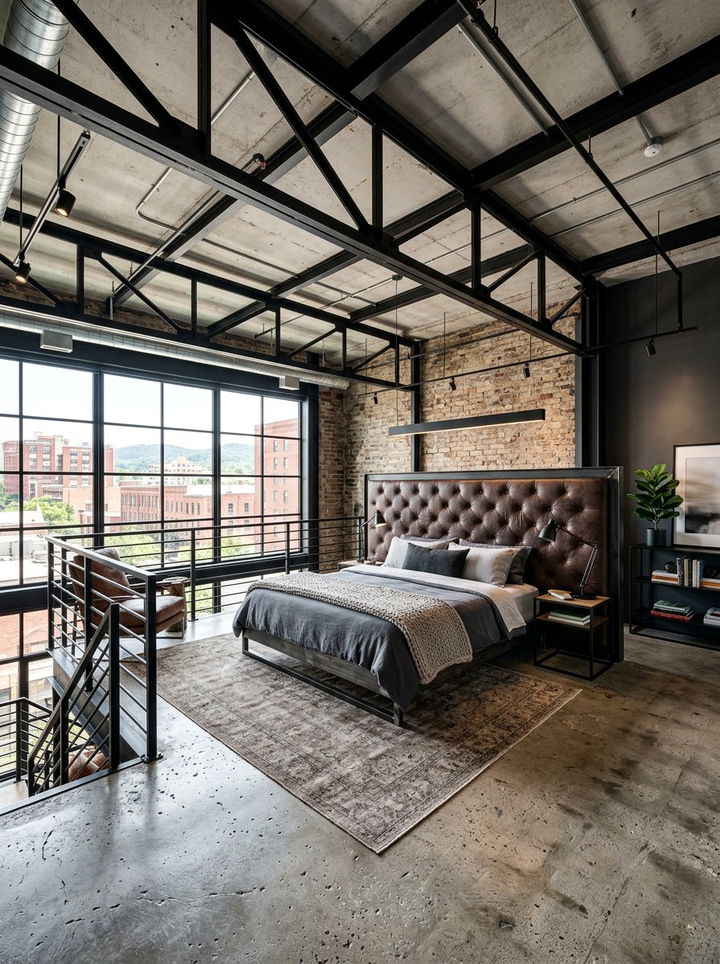
Using black steel frames and metal accents can give a bedroom a sharp, architectural edge that feels modern and masculine. An industrial steel bedroom often features structural elements like exposed beams, metal-framed windows, and steel-clad doors that define the geometry of the space. To prevent the room from feeling too cold, architects often mix the metal with reclaimed wood or soft leather upholstery. This combination of hard and soft materials creates a balanced and interesting aesthetic that feels very grounded. High ceilings and open ductwork are also common features that add to the urban, loft-like feel. It is a bold design choice that highlights the strength of the building’s core materials.
13. Slotted Window Bedroom
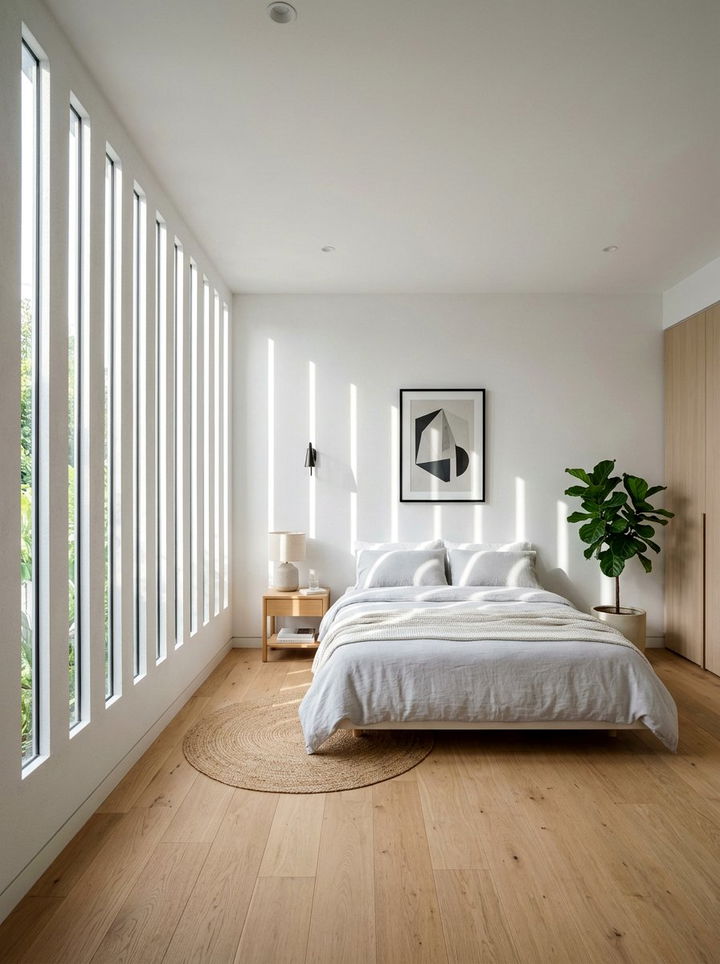
Sometimes, the most interesting architectural features are the ones that play with light in unexpected and subtle ways. A bedroom with slotted windows uses thin, horizontal or vertical openings in the wall to provide privacy while still letting in slivers of sunlight. These windows act like natural art pieces, casting changing shadows across the room as the sun moves through the sky. This design is particularly effective in urban areas where you want to maintain a sense of seclusion without feeling boxed in. The narrow openings allow you to frame specific views of the landscape or the sky. It is a sophisticated way to manage light and privacy through clever structural planning.
14. Cantilevered Bed Design
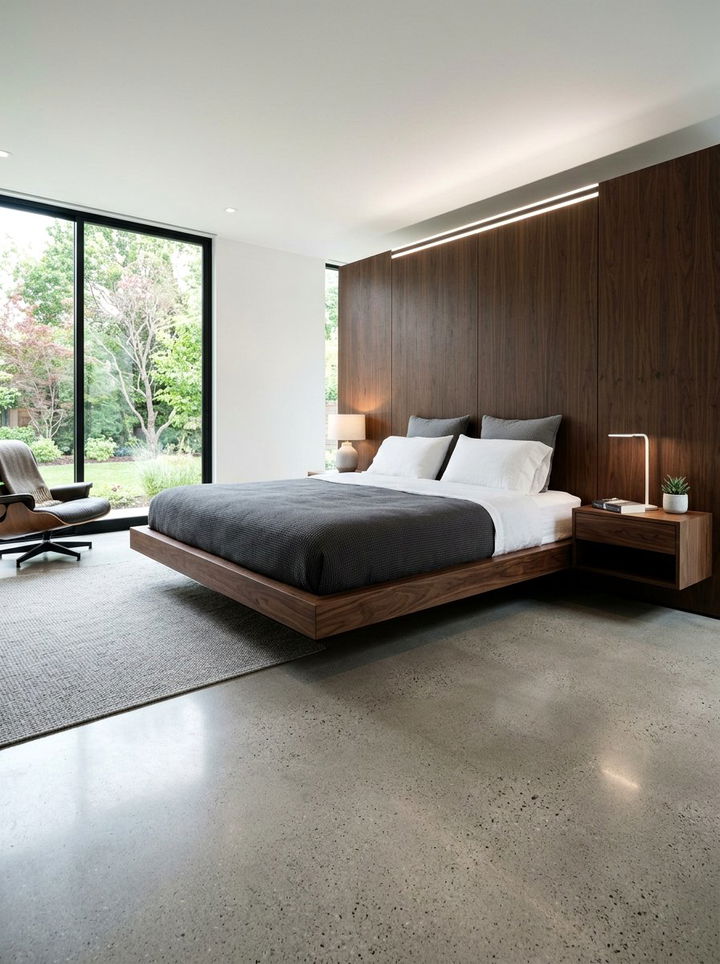
For a look that truly defies gravity, a cantilevered bed is an architectural marvel that adds instant drama to any bedroom. This design involves a bed platform that is supported on only one side, usually anchored deeply into a structural wall. The result is a bed that hangs over the floor without any visible legs or supports on the outer edges. This creates a stunning visual impact and makes the entire room feel much more spacious and modern. It is a perfect solution for minimalist homes where every design element needs to serve a purpose while looking like a piece of art. The space under the bed remains entirely open and clear.
15. Skylight Bedroom
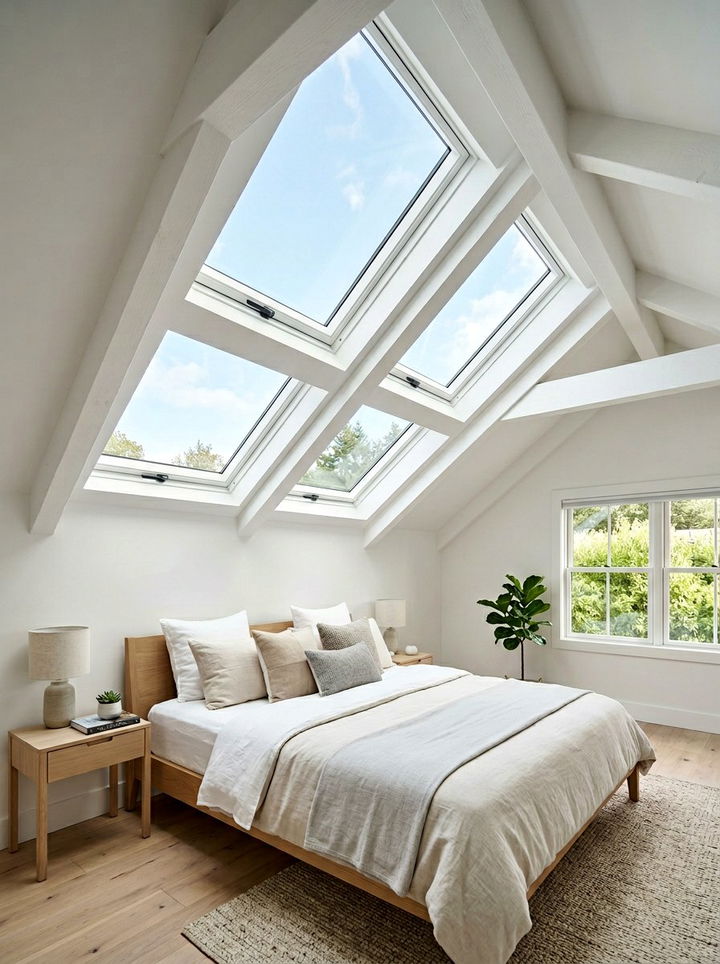
There is nothing quite like looking up from your pillow and seeing the clouds drift by or the stars twinkling above. A skylight bedroom uses roof windows to bring in an abundance of top-down light, which is often much brighter than light from side windows. This is a brilliant solution for rooms located in the center of a house or for attic conversions where wall space is limited. Architects often position the skylights directly over the bed to create a focal point and a connection to the celestial rhythm. To prevent overheating, these windows are usually fitted with integrated blinds or high-tech solar glass. It turns a standard room into a bright and airy observatory.
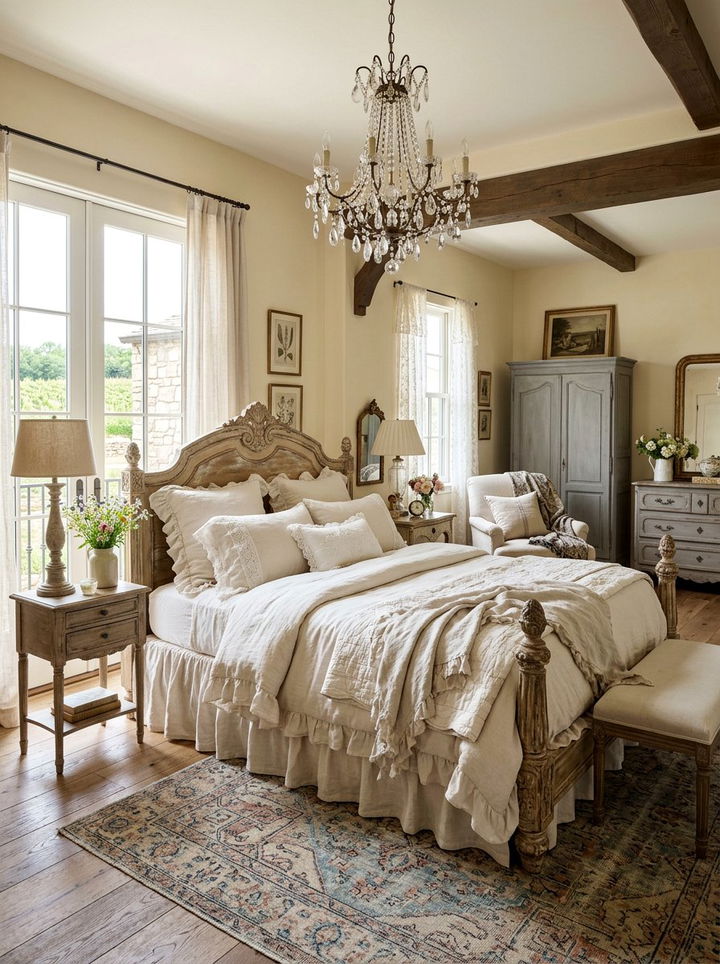
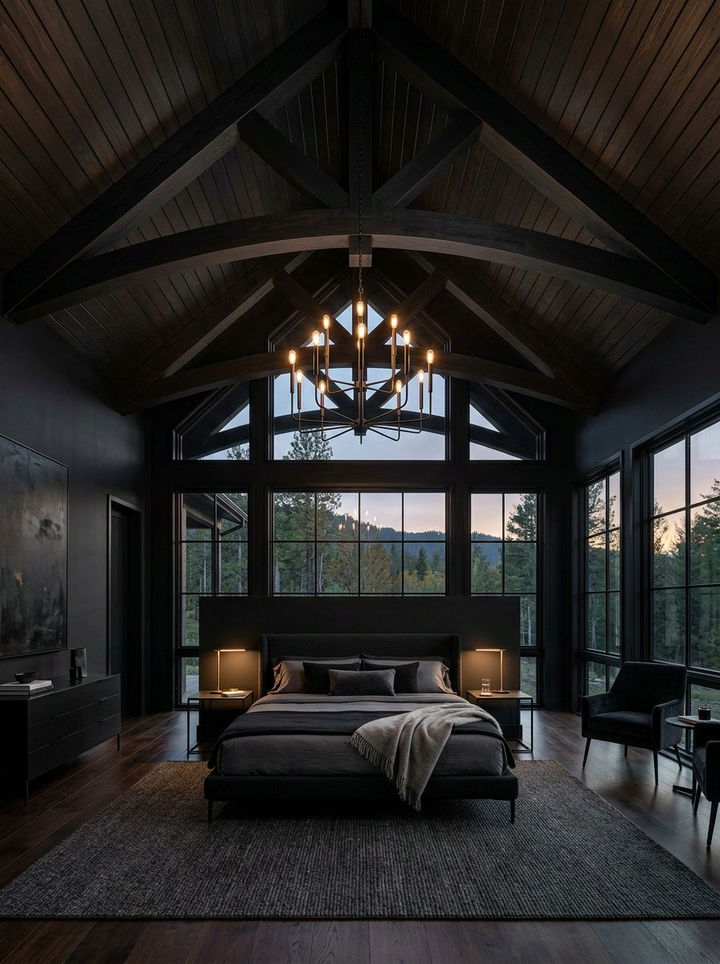
16. Built In Headboard Bedroom
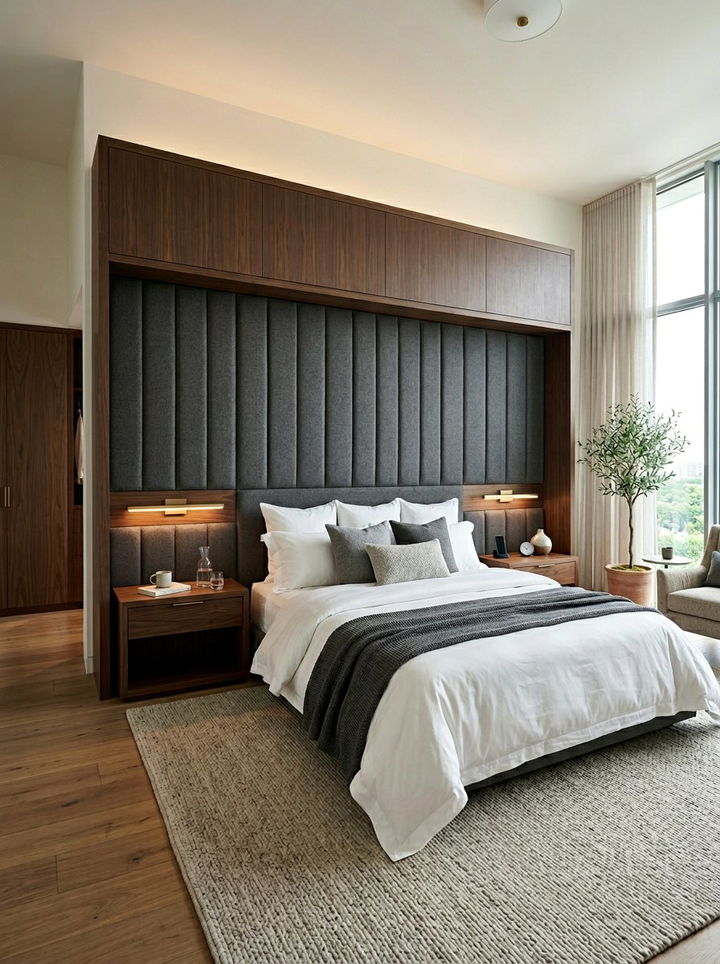
Instead of buying a separate piece of furniture, why not make your headboard a permanent part of the room’s architecture? A built-in headboard can span the entire width of a wall, incorporating nightstands, lighting, and even hidden storage compartments into one cohesive unit. This approach creates a very polished and custom look that makes the room feel like a high-end hotel suite. By using materials like upholstered panels, wood slats, or even stone, the headboard becomes a major design feature that grounds the bed in the space. It also helps to hide unsightly cords and cables, keeping the bedside area clean and organized. It is a masterclass in functional and integrated design.
17. Open Plan Bedroom Ensuite

Modern architecture often seeks to break down the walls between different functional zones to create a more fluid and luxurious living experience. An open plan bedroom ensuite integrates the bathroom directly into the sleeping area, often separated only by a change in flooring or a partial glass partition. This layout makes the room feel like a massive, spa-like retreat where you can move seamlessly from the bath to the bed. While it requires careful planning for moisture control and privacy, the visual result is incredibly spacious and high-end. Freestanding tubs often become sculptural focal points within the room. It is a bold choice for those who value a cohesive and expansive primary suite.
18. Split Level Bedroom
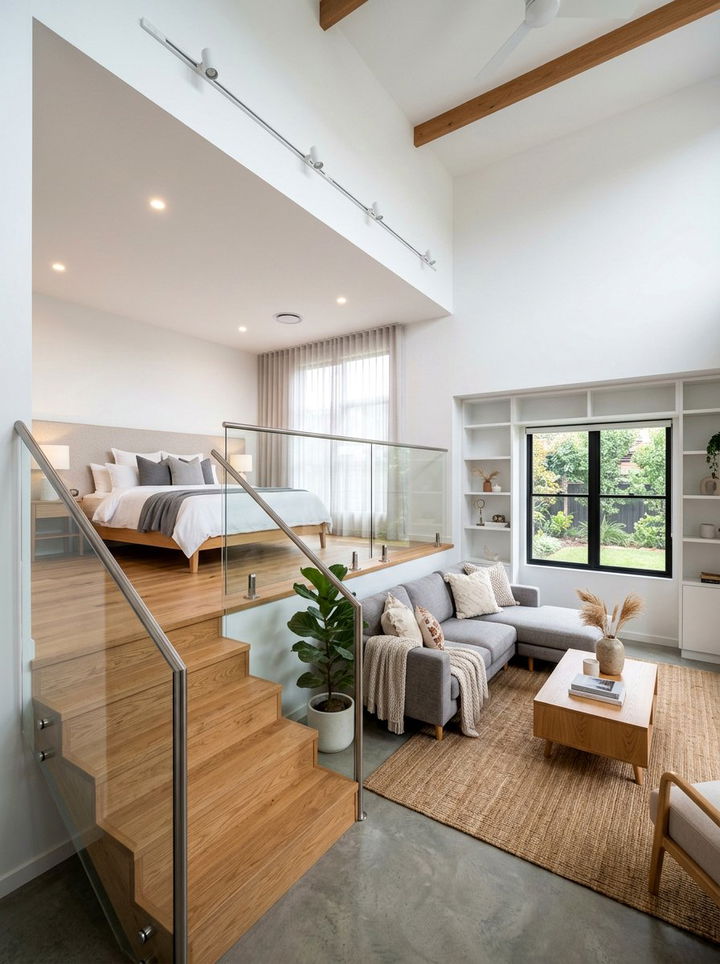
When you have a room with high ceilings, a split-level design allows you to create different zones for sleeping, lounging, or working. By elevating the bed onto a wooden platform or a small mezzanine, you create a clear architectural distinction between the “active” and “rest” areas of the room. This vertical layering adds a lot of visual interest and makes the bedroom feel much more dynamic than a standard flat layout. The steps leading up to the bed can even be used as hidden drawers for extra storage. It is a smart way to use the volume of a space rather than just its square footage. This design feels like a private, multi-story sanctuary.
19. Curved Wall Bedroom
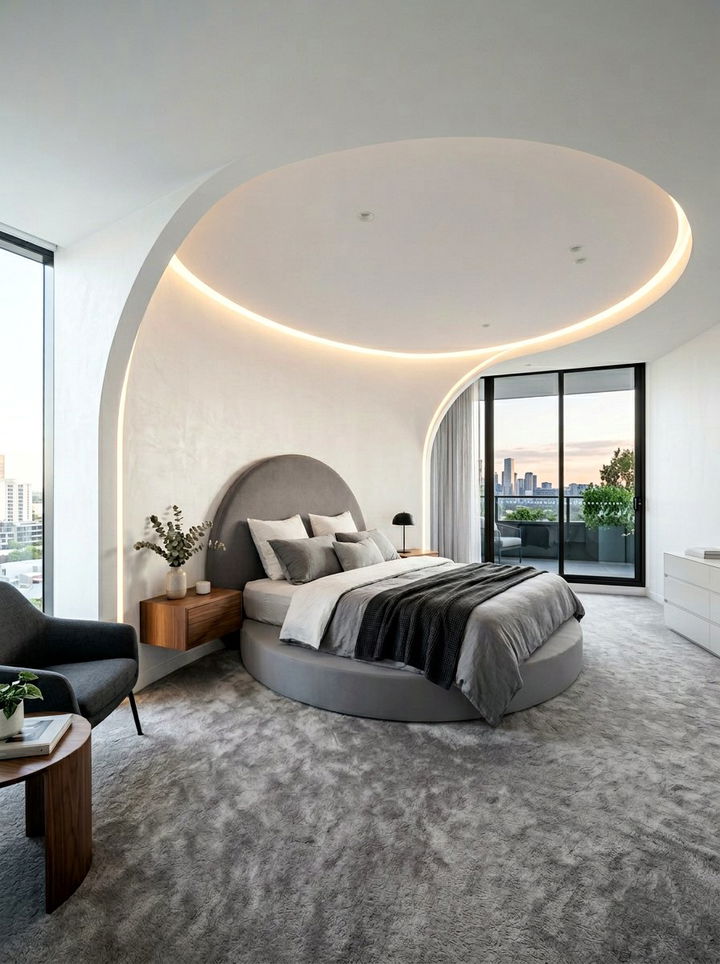
Breaking away from the standard boxy room, a curved wall bedroom introduces a sense of fluidity and softness that is incredibly soothing. Architectural curves can be used to wrap around a bed, create a circular dressing area, or simply guide the eye through the space. These rounded forms feel more organic and natural than sharp corners, making the room feel more like a protective nest. Designing with curves requires a high level of craftsmanship, particularly when it comes to custom furniture and wall finishes. When executed well, a curved wall becomes a stunning sculptural element that defines the entire character of the home. It is a sophisticated departure from traditional residential geometry.
20. Concrete And Wood Bedroom
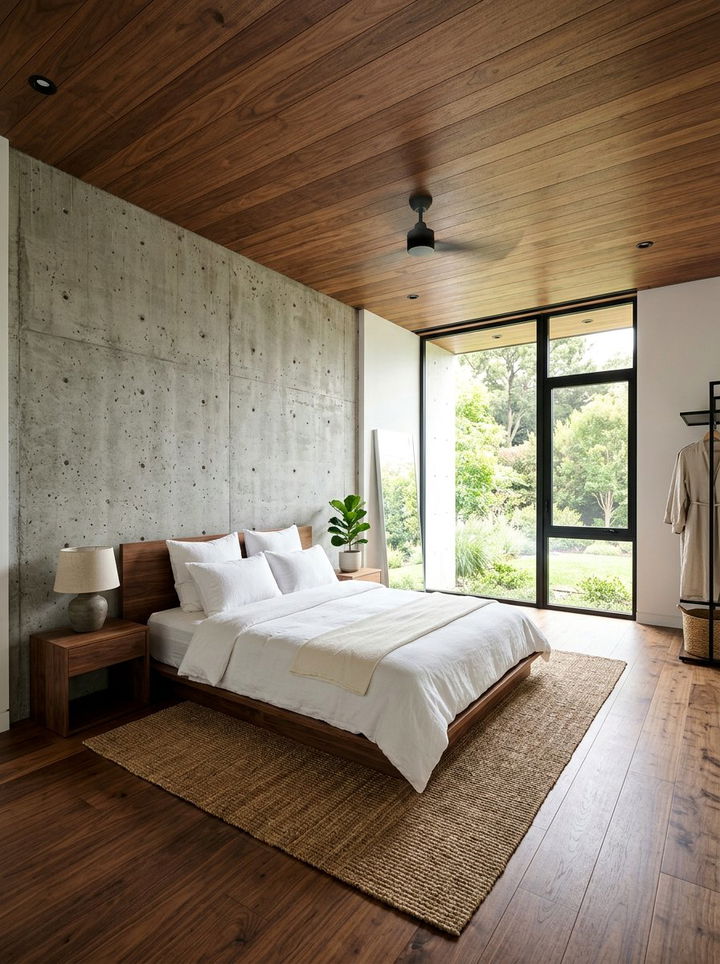
The combination of cool, industrial concrete and warm, natural wood is one of the most successful material pairings in modern architecture. In a bedroom, this duo provides a perfect balance between strength and comfort, making the space feel both grounded and inviting. Typically, an architect might use a concrete floor or wall as a backdrop for a warm oak bed frame or walnut wall panels. The contrast in textures — one smooth and cold, the other grainy and warm — adds a lot of depth and visual interest without needing much decor. This palette is incredibly versatile and works well with a variety of styles, from brutalist to Scandi-modern. It is a timeless and sophisticated choice.
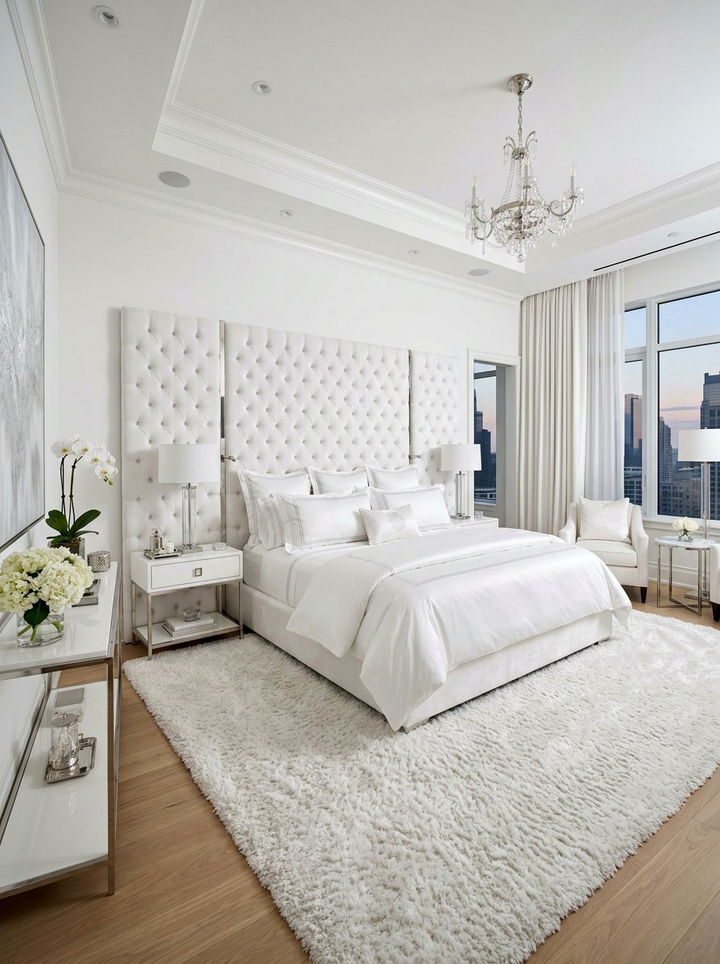
21. Black Trim Bedroom
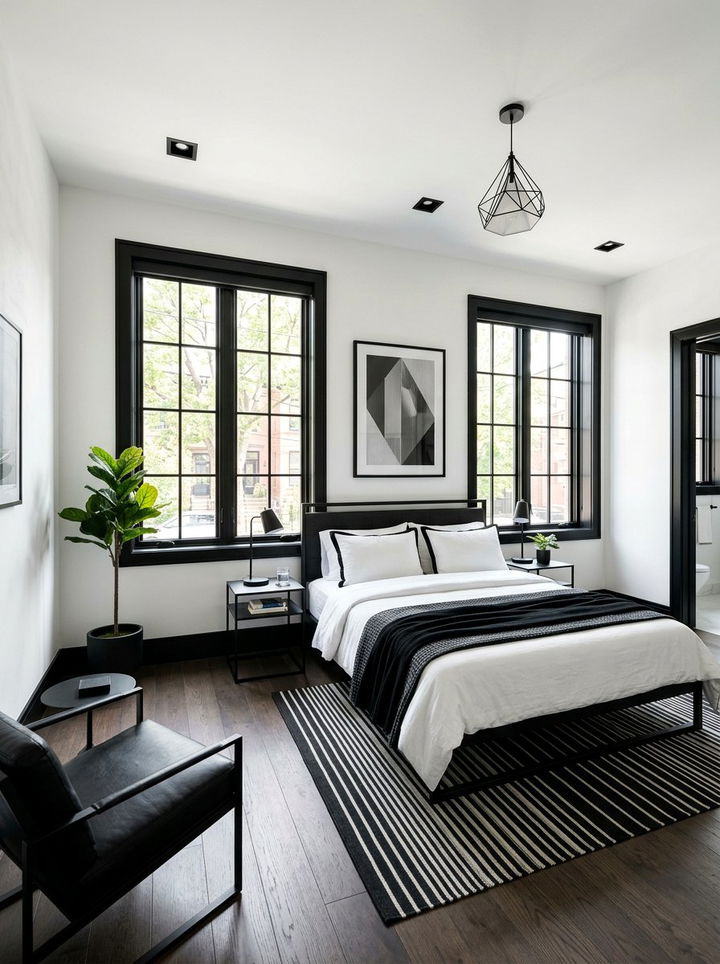
Using high-contrast black trim is an architectural technique that helps to frame views and define the edges of a room with precision. Whether it is black-framed windows, baseboards, or door frames, these dark lines act like ink on a page, making every structural element stand out. In a bedroom, this look feels very modern and tailored, especially when paired with crisp white walls and neutral bedding. The black trim provides a sophisticated outline that gives the room a sense of order and high-end design. It is a simple yet powerful way to make a standard room feel like it was designed by a professional architect. The contrast is both striking and incredibly elegant.
22. Hidden Storage Bedroom
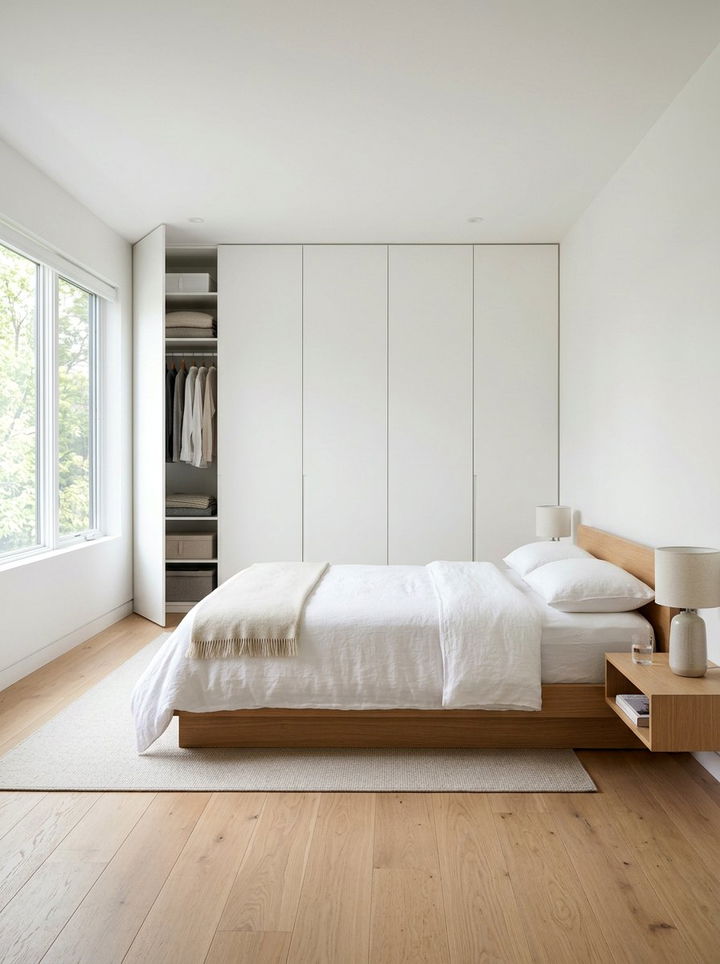
A truly well-designed architectural bedroom should feel effortless and clutter-free, which often means hiding the necessities of daily life behind sleek panels. Hidden storage uses floor-to-ceiling cabinetry that blends perfectly with the walls, often without any visible handles or hardware. This allows the room to maintain its clean lines and sense of calm, as clothes, shoes, and suitcases are all tucked away out of sight. Some designs even include hidden doors that lead to walk-in closets or ensuite bathrooms, making the room look like a seamless wooden box. It is the ultimate luxury for anyone who wants a minimalist aesthetic without sacrificing the practical need for extensive storage space.
23. Double Height Bedroom
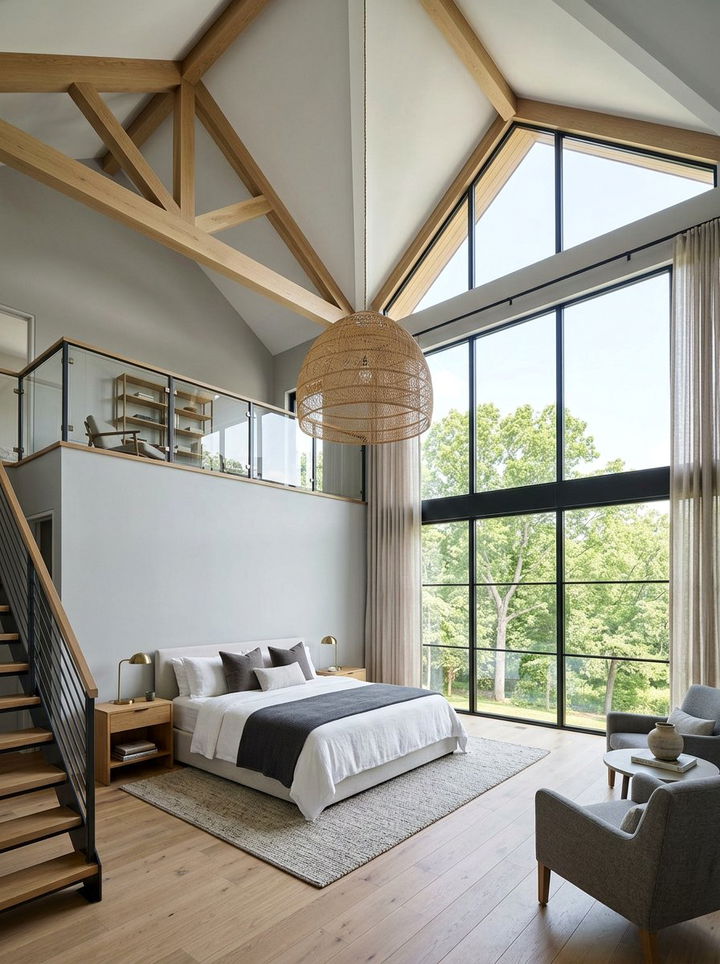
If you are lucky enough to have a double-height bedroom, the sheer volume of the space creates a feeling of grandeur and airiness that is unmatched. These rooms often feature massive windows that span both levels, filling the entire volume with an incredible amount of natural light. Architects often use this height to hang oversized pendant lights or to create a dramatic feature wall that draws the eye upward. The verticality of the room makes it feel like a cathedral of rest, providing a sense of freedom and openness. To keep it cozy, it is important to use textures and colors that ground the lower level where the bed is actually located.
24. Mezzanine Bedroom
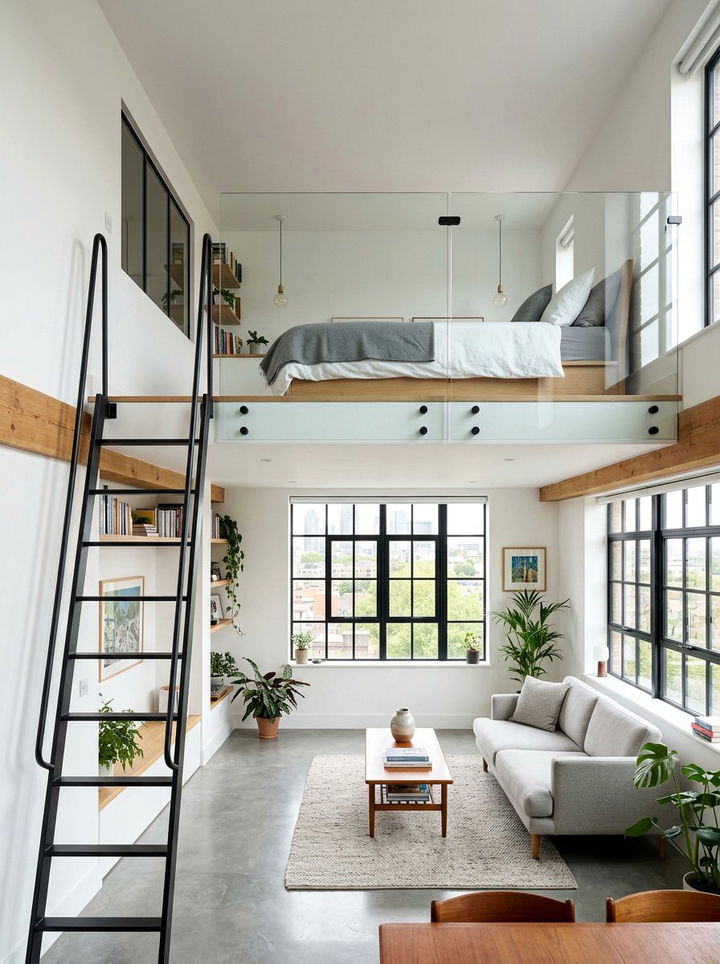
A mezzanine bedroom is a classic architectural solution for small spaces or tall industrial lofts where you want to maximize the floor plan. By placing the sleeping area on a raised platform overlooking the living space, you create a private nest that feels separated from the rest of the home. This layout is perfect for maintaining an open-concept feel while still providing a dedicated zone for sleep. The staircase leading up to the mezzanine can be a design feature in itself, using floating treads or glass railings to keep the look light. It is a clever way to add an extra room without needing to expand the building’s physical footprint.
25. Sustainable Cork Bedroom
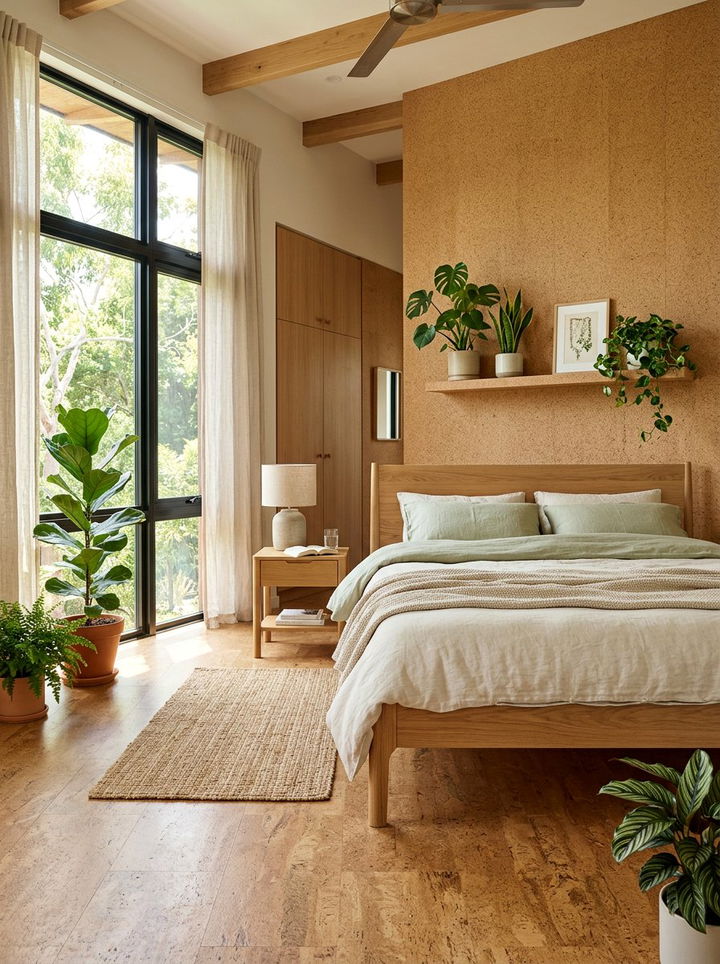
Architects are increasingly turning to sustainable materials like cork to create bedrooms that are as eco-friendly as they are beautiful. Cork is a fantastic choice for bedroom flooring and wall treatments because it is naturally warm to the touch and provides excellent sound insulation. Its unique, dappled texture adds a layer of organic detail that feels very modern and soft. Because it is a renewable resource, using cork is a great way to bring a bit of nature into the home while being mindful of the environment. When paired with simple, clean-lined furniture and a neutral palette, a cork-heavy room feels like a peaceful, earth-grounded sanctuary that is built to last.
26. Custom Woodwork Bedroom
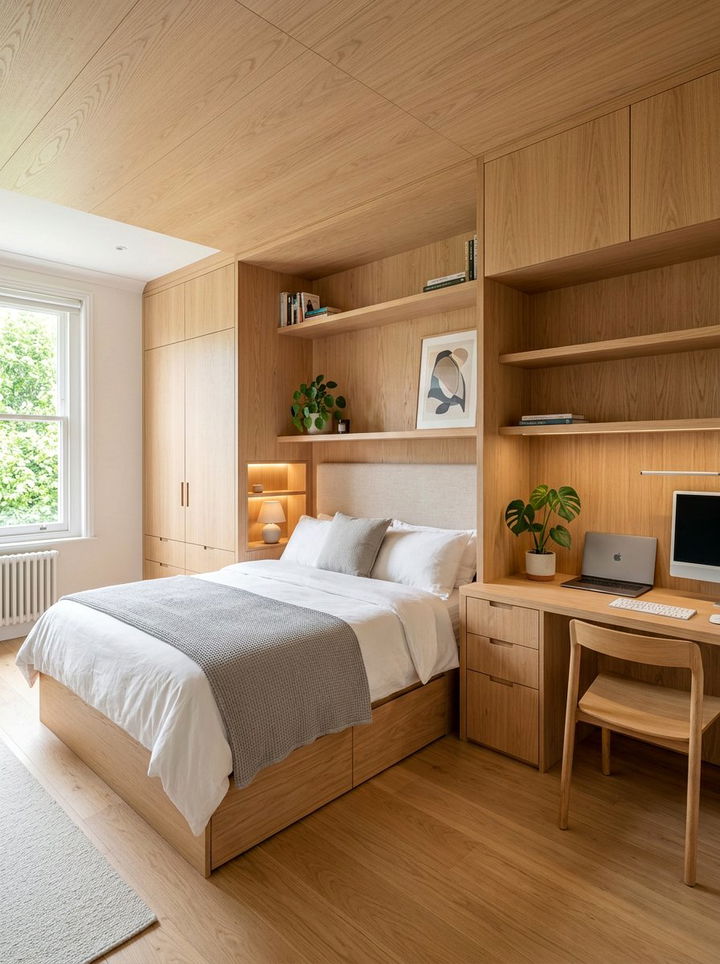
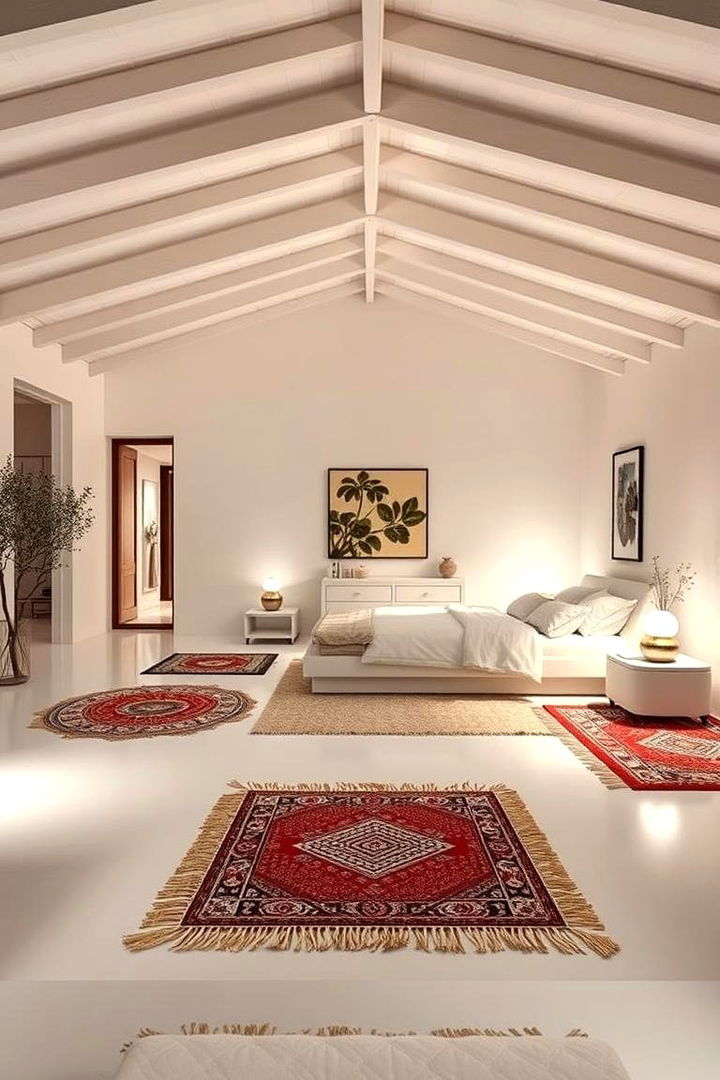
When every piece of furniture in a room is custom-built to fit the architecture, the result is a space that feels incredibly cohesive and intentional. A custom woodwork bedroom might feature a bed, desk, and wardrobe all made from the same species of wood, designed to fit perfectly into the room’s specific dimensions. This bespoke approach allows the architect to maximize every inch of space while creating a unified aesthetic that is impossible to achieve with store-bought items. The continuity of the wood grain across different surfaces creates a rhythmic and calming environment. It is a high-end design strategy that turns a simple bedroom into a handcrafted masterpiece of functional interior art.
27. Modern Farmhouse Bedroom
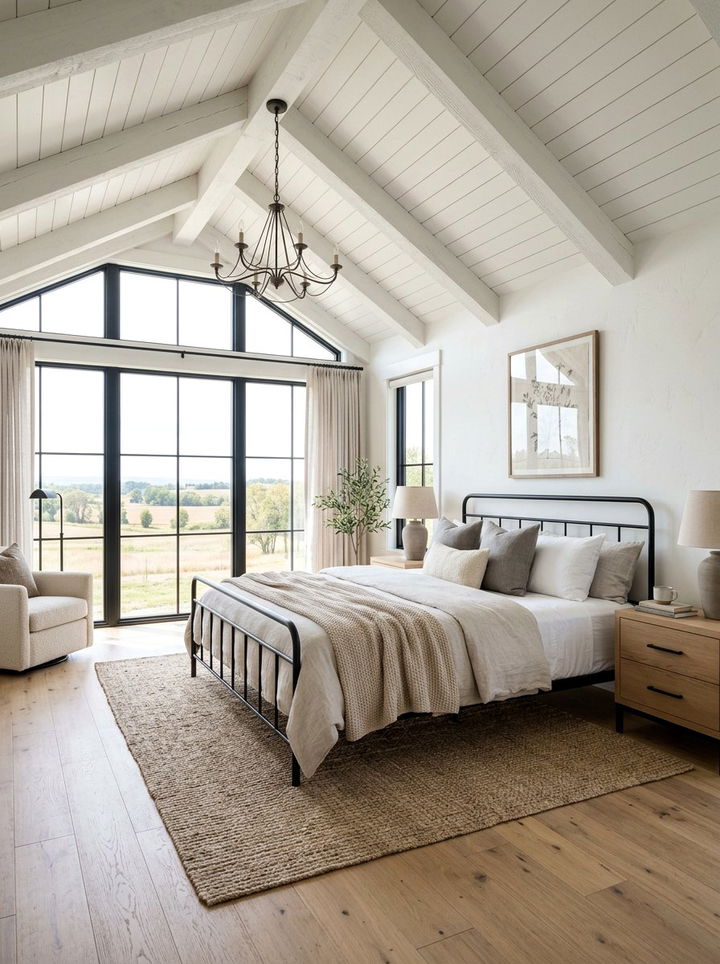
The modern farmhouse style combines the rustic charm of traditional country living with the clean, sharp lines of contemporary architecture. In a bedroom, this often manifests as high vaulted ceilings with exposed white or natural wood beams and large black-framed windows. The layout is usually simple and symmetrical, creating a sense of balance and traditional comfort. By using a palette of whites, creams, and natural textures, the room feels bright and airy while still being incredibly cozy. It is a style that feels very grounded and approachable, making it a popular choice for family homes. The blend of old-world soul and modern structure creates a timeless and very inviting retreat.
28. Japanese Zen Bedroom

Drawing inspiration from traditional Japanese architecture, a Zen bedroom focuses on the beauty of simplicity, natural materials, and the concept of “ma, ” or negative space. These rooms often feature low-profile platform beds, sliding shoji-style screens, and a very restrained color palette of earth tones. The goal is to create a space that is entirely free of distractions, allowing the mind to rest and reset. Architects use natural wood, stone, and paper to bring a sense of the outdoors inside. By keeping the furniture low and the floor plan open, the room feels much larger and more peaceful. It is a masterclass in how minimalism can lead to a deeper sense of well-being.
29. Monochromatic Gray Bedroom

Using a single color in varying shades and textures is a classic architectural move that creates a sense of sophistication and unity. A monochromatic gray bedroom uses different tones of stone, slate, and charcoal to define the space without the need for bright colors. This approach highlights the structural shapes and the quality of the materials used in the room. By mixing matte finishes with polished surfaces and soft fabrics, the gray palette never feels flat or boring. It is a very calming and gender-neutral design that feels incredibly modern and high-end. The consistency of the color allows the architectural details, like shadow lines and window frames, to take center stage.
30. High Contrast Bedroom
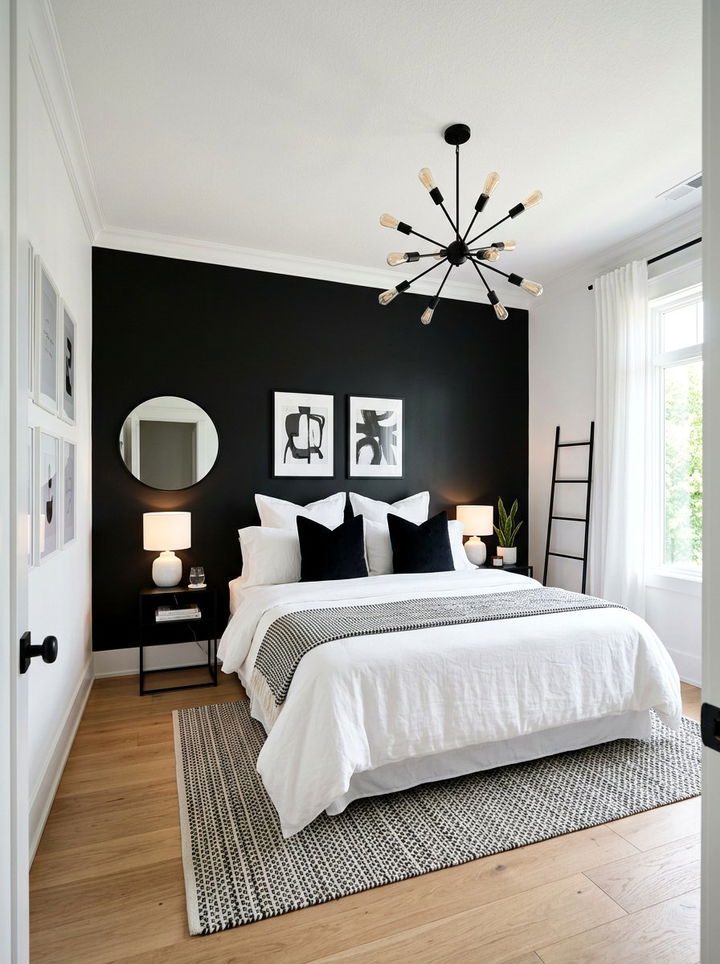
A high contrast bedroom uses the sharp juxtaposition of light and dark elements to create a dramatic and visually stimulating environment. This often involves pairing bright white walls with deep black architectural features, such as window frames, light fixtures, or a dark wood floor. The contrast helps to define the geometry of the room and makes every design choice feel more intentional and bold. Architects love this look because it adds a lot of energy to a space while remaining very clean and organized. When balanced correctly with soft textures, a high-contrast room feels both edgy and comfortable. It is a great way to make a strong architectural statement in a private personal space.
Conclusion:
Designing a bedroom with an architectural mindset means looking beyond the surface to understand how space, light, and materials work together. Each of the concepts discussed above demonstrates how a well-thought-out structure can transform a simple sleeping area into a functional work of art. Whether you prefer the raw honesty of concrete, the warmth of timber, or the expansive feel of floor-to-ceiling glass, the key is intentionality. By focusing on high-quality materials and clever spatial layouts, you can create a room that not only looks stunning on Pinterest but also provides a deep sense of calm and utility. Your bedroom is the most personal space in your home, and it deserves the care and precision of professional architectural design.
Related posts: